No. 1612 - Tunbridge - 'The Red Chapel' at Ballochmyle (c.1849-1885)
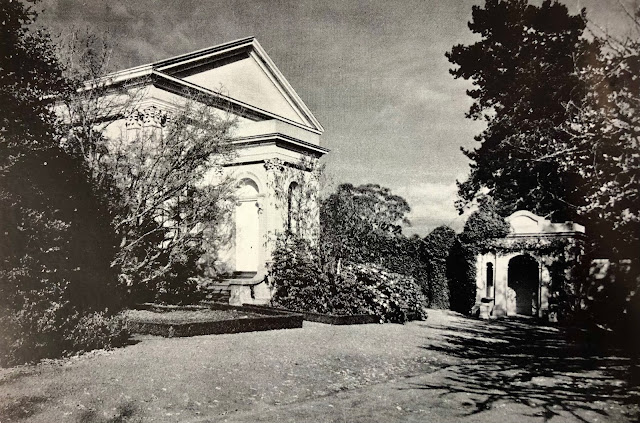
Very little is known about a small chapel built by James Maclanachan (1799-1884) at his property Ballochmyle, near Tunbridge. A brick chapel was built in 1849 and was locally known as the “Red Chapel” or “The Wilderness Church”. The chapel was used up until Maclanachan’s death in 1884. The chapel may have resembled the Presbyterian kirk at Kirklands. Maclanachan left a bequest for the construction of a new Presbyterian church closer to Tunbridge, on condition that services were conducted by the minister in charge of the district at least once a month. The new church, dedicated to St Matthew, opened in 1885.
In December 1848 an advertisement calling for tenders for the construction of a brick church was placed in The Courier by Maclanachan and it is likely that the building was completed in the following year. Upon the ‘golden jubilee’ of St Matthew’s Presbyterian church in 1935, a report published in the Hobart Mercury provides a few details about Maclanachan’s chapel:
“…All that now remains of this old building is a heap of bricks, and stones, it was for long the centre of worship for a large number of Midland residents, who travelled thereto on a Sabbath over unformed bush roads by chaise cart, coach, buggy, and on horseback…”.
The article also provides a clue as to the chapel’s location:
“What is believed to be the first wire fence erected in Tasmania - in face of much opposition at the time, perhaps because wire fences were not relished by huntsmen and hounds of the day - forming part of the boundary line between Ballochmyle, Lowes Park, and Glen Morey estates, runs past the old chapel….”
The report concludes:
“Services were conducted by Dr. Turnbull, of Campbell Town, whose charge covered Campbell Town, Cleveland, Lincoln [Kirklands], and Ballochmyle…”.
While little else is known about Maclanachan’s Red Chapel, the man himself left a rich historical legacy which is recorded in the Australian Dictionary of Biography. To close this article I have reproduced Maclanachan’s obituary which was published in the Mercury in January 1884:
“We regret to have to record this morning the death of the Hon. James Maclanachan, which occurred at his residence, Ballochmyle House, Tunbridge, at a quarter-past 1 o'clock yesterday afternoon. The deceased had reached the patriarchal age of 84 years, and his death was therefore not much a matter for surprise, but it was more sudden than was expected. A fortnight ago he was in Hobart, seemingly in good health, and as jolly as ever and be returned home on tho 13th inst. A few days ago be drove from his residence to Kirklands, and back, a distance of about, 42 miles, to visit his wife's grave, and it' is probable that the unusual exertion brought on tho attack of paralysis which has since proved fatal….”
“Mr. Maclanachan was one of the oldest colonists, as well as the oldest inhabitants, in the island, having arrived here from Scotland in or about the year 1823. He assumed the management of a station near| Oatlands, and afterwards by marrying, we believe, the widow of the former proprietor, became himself the owner of the estate. He subsequently gave the property the name of Ballochmyle, after his native town In Scotland. Tho estate has latterly comprised about 10,000 acres of pastoral and agricultural land, which have been used principally for wool-growing, and has furnished its owner, with a fair share of the good things of this world".
"Mr. Maclanachan was never a remarkable man in any respect, and created no great stir in either social or political life but he did much useful work in many directions. He was placed in the commission of the peace on tho 20th September, 1843, and took an active interest in fulfilling his duties as a magistrate, being constantly In attendance on the Oatlands bench. In 1860 he sat in the House of Assembly as the representative for Oatlands. His most conspicuous work while there was to introduce and pass through Parliament the Trespass of Lands Act, 1802, designed to stop the abuses then existing, and which has since been commonly known as tho "Maclanachan Act. In 1863 Mr. Maclanachan was succeeded by Mr, James Lord, and about that time he proceeded on a visit to the Old Country. Five years afterwards he again entered Parliament being returned in July, 1883, a member of the Legislative Council for the Jordan in the place of the Hon. Isaac Bisdee, and he continued to represent that constituency till his death….”.
"Mr. Maclanachan was brought far more prominently before the public by his connection with the Midland Agricultural Association, in which he took a great interest, and for many years acted as secretary. From its initiation he was a moving spirit in the society, and, with Mr. Phillip Smith, bore a large amount of the work involved in it. Many years ago he paid much attention to the acclimatisation and breeding of birds,' etc, pheasants in particular".
"The deceased was, also for many years an elder of the, Presbyterian Church, and took an active interest in the affairs of that body. Personally, Mr. Maclanachan was much respected, and his jovial disposition gained for him a large circle of friends. His tall, wiry figure was well known in Hobart, and during his time he had seen a good deal of exercise. In the olden days, when roads were bad, it was not uncommon thing for him to walk in from Tunbridge to Hobart, a distance of between 70 and 80 miles, and he often accomplished the journey in less time than could be done by driving".
"He seems to have come from along-lived family, for his father lived to something like 90 years of age. The funeral will take place to-morrow, leaving Ballochmyle at 9 a.m., and Campbell Town at 1 pm., and the deceased will be placed by his wife's side in the Kirkland's cemetery.”
Shortly after James Maclanachan's death the Ballochmyle estate was auctioned. William Jones, a storekeeper of Oatlands, bought the property at the auction for £5 per acre. He remained owner of Ballochmyle and a successful farmer until his death in 1917.
Sources:
In December 1848 an advertisement calling for tenders for the construction of a brick church was placed in The Courier by Maclanachan and it is likely that the building was completed in the following year. Upon the ‘golden jubilee’ of St Matthew’s Presbyterian church in 1935, a report published in the Hobart Mercury provides a few details about Maclanachan’s chapel:
“…All that now remains of this old building is a heap of bricks, and stones, it was for long the centre of worship for a large number of Midland residents, who travelled thereto on a Sabbath over unformed bush roads by chaise cart, coach, buggy, and on horseback…”.
The article also provides a clue as to the chapel’s location:
“What is believed to be the first wire fence erected in Tasmania - in face of much opposition at the time, perhaps because wire fences were not relished by huntsmen and hounds of the day - forming part of the boundary line between Ballochmyle, Lowes Park, and Glen Morey estates, runs past the old chapel….”
The report concludes:
“Services were conducted by Dr. Turnbull, of Campbell Town, whose charge covered Campbell Town, Cleveland, Lincoln [Kirklands], and Ballochmyle…”.
While little else is known about Maclanachan’s Red Chapel, the man himself left a rich historical legacy which is recorded in the Australian Dictionary of Biography. To close this article I have reproduced Maclanachan’s obituary which was published in the Mercury in January 1884:
“We regret to have to record this morning the death of the Hon. James Maclanachan, which occurred at his residence, Ballochmyle House, Tunbridge, at a quarter-past 1 o'clock yesterday afternoon. The deceased had reached the patriarchal age of 84 years, and his death was therefore not much a matter for surprise, but it was more sudden than was expected. A fortnight ago he was in Hobart, seemingly in good health, and as jolly as ever and be returned home on tho 13th inst. A few days ago be drove from his residence to Kirklands, and back, a distance of about, 42 miles, to visit his wife's grave, and it' is probable that the unusual exertion brought on tho attack of paralysis which has since proved fatal….”
“Mr. Maclanachan was one of the oldest colonists, as well as the oldest inhabitants, in the island, having arrived here from Scotland in or about the year 1823. He assumed the management of a station near| Oatlands, and afterwards by marrying, we believe, the widow of the former proprietor, became himself the owner of the estate. He subsequently gave the property the name of Ballochmyle, after his native town In Scotland. Tho estate has latterly comprised about 10,000 acres of pastoral and agricultural land, which have been used principally for wool-growing, and has furnished its owner, with a fair share of the good things of this world".
"Mr. Maclanachan was never a remarkable man in any respect, and created no great stir in either social or political life but he did much useful work in many directions. He was placed in the commission of the peace on tho 20th September, 1843, and took an active interest in fulfilling his duties as a magistrate, being constantly In attendance on the Oatlands bench. In 1860 he sat in the House of Assembly as the representative for Oatlands. His most conspicuous work while there was to introduce and pass through Parliament the Trespass of Lands Act, 1802, designed to stop the abuses then existing, and which has since been commonly known as tho "Maclanachan Act. In 1863 Mr. Maclanachan was succeeded by Mr, James Lord, and about that time he proceeded on a visit to the Old Country. Five years afterwards he again entered Parliament being returned in July, 1883, a member of the Legislative Council for the Jordan in the place of the Hon. Isaac Bisdee, and he continued to represent that constituency till his death….”.
"Mr. Maclanachan was brought far more prominently before the public by his connection with the Midland Agricultural Association, in which he took a great interest, and for many years acted as secretary. From its initiation he was a moving spirit in the society, and, with Mr. Phillip Smith, bore a large amount of the work involved in it. Many years ago he paid much attention to the acclimatisation and breeding of birds,' etc, pheasants in particular".
"The deceased was, also for many years an elder of the, Presbyterian Church, and took an active interest in the affairs of that body. Personally, Mr. Maclanachan was much respected, and his jovial disposition gained for him a large circle of friends. His tall, wiry figure was well known in Hobart, and during his time he had seen a good deal of exercise. In the olden days, when roads were bad, it was not uncommon thing for him to walk in from Tunbridge to Hobart, a distance of between 70 and 80 miles, and he often accomplished the journey in less time than could be done by driving".
"He seems to have come from along-lived family, for his father lived to something like 90 years of age. The funeral will take place to-morrow, leaving Ballochmyle at 9 a.m., and Campbell Town at 1 pm., and the deceased will be placed by his wife's side in the Kirkland's cemetery.”
Shortly after James Maclanachan's death the Ballochmyle estate was auctioned. William Jones, a storekeeper of Oatlands, bought the property at the auction for £5 per acre. He remained owner of Ballochmyle and a successful farmer until his death in 1917.
 |
| The Courier, December 1848 |
 |
| James Maclanachan - House of Assembly Long Room Picture: 51 - Parliament of Tasmania |
 | ||
| Ballochmyle - Libraries Tasmania - Item Number NS2267/1/43 |
 |
| Maclanachan was buried alongside his wife Sarah at Kirklands |
Sources:
Courier, Wednesday 27 December 1848, page 4
Mercury, Wednesday 23 January 1884, page 3
Tasmanian, Saturday 15 March 1884, page 28
Mercury, Monday 28 October 1935, page 10
https://adb.anu.edu.au/biography/maclanachan-james-4119


Comments
Post a Comment