Posts

Showing posts with the label 1980-89

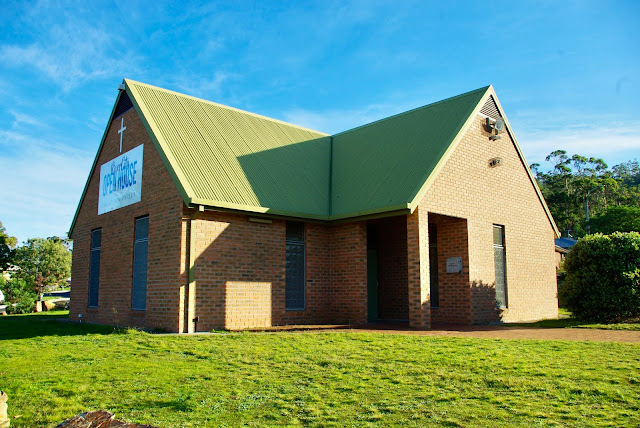
No. 963 - Claremont - Edge Anglican Church (St Alban's)

Image
Claremont is a suburb of Greater Hobart. It is named after Claremont House, which was built in the 1830s by local settler Henry Bilton. Claremont was the home of an Army training camp during the Great War which at that time consisted of only a few scattered houses in a largely rural setting. Claremont’s first Anglican church, which was built in 1913, was replaced by the present church on a new site in 1981. The original building still exists but has been converted into a house. [ see No. 718 ] In 2016 St Alban’s was renamed as ‘Edge Anglican Church’ in association with St Matthew’s at New Norfolk and St Mark’s at Pontville; which form “a network of Anglican churches in the evangelical charismatic tradition”. The original St Alban's - source: Libraries Tasmania.
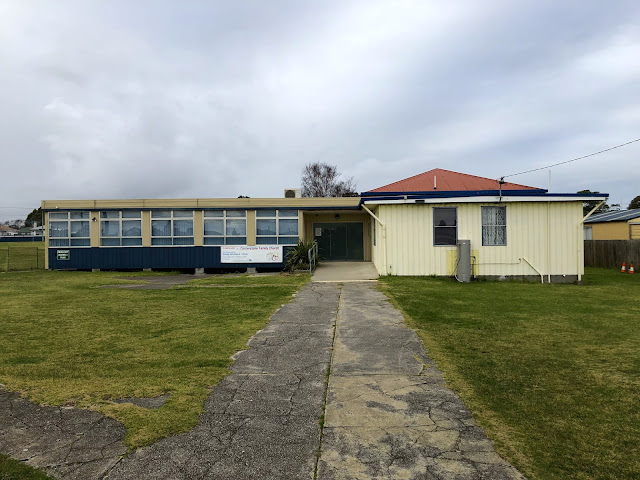
No. 954 - George Town - Cornerstone Family Church

Image
George Town is one of the oldest towns in Australia and is the second oldest town in Tasmania. It is therefore unusual that most of the town’s churches were only established after World War Two. The emergence of Launceston as the administrative centre of the North in the early years of the colony meant that George Town was destined to remain a backwater until more recent times. The construction of an aluminium smelter at nearby Bell Bay in the 1950s as well as the development of industry south of the town, accelerated George Town’s population growth in the post-war era. Cornerstone Family Church was founded in 1989 by Max Triebe and James Cloudsdale. Church meetings were initially held in ‘The Grove Restaurant’ on Sunday evenings. In 1994 the church purchased the Gordon Square Kindergarten and converted the building into a meeting place. In 2014 the church was extended after it acquired two adjoined demountable classrooms from St Patricks Primary school, Latrobe. In 2015 the original k...

No. 951 - Currie - Seventh Day Adventist Church

Image
Currie is the largest town and administrative centre on King Island. The settlement at Currie began after the ship "Netherby" ran onto rocks, south of the harbour mouth in 1866, and was taken into the harbour for salvaging by Captain Archibald Currie. The harbour and later the settlement were named in his honour. The Seventh-Day Adventist Church was established in Tasmania in 1888. The denomination originated in the USA in the 1860s and in 1885 a group of Adventists travelled to Australia and began preaching in Melbourne. After a church group was established in Melbourne in 1886 members moved on to Sydney, Adelaide and Hobart. Public tent meetings were held in Sandy Bay in 1888 which led to the establishment of a church at Collinsvale and then Hobart and Launceston shortly after the start of the 20th century. Currie’s Seventh Day Adventist church was established following a visit to King Island by members of the church in 1977. In 1978 ‘cottage meetings’ were held and soon ...

No. 908 - St Marys - Holy Trinity Anglican Church

Image
St Marys is a small township at the junction of the Tasman Highway and the Esk Highway on the East Coast of Tasmania. It was once the eastern terminus for the Fingal Railway. The town is part of the Break O'Day Council.  Holy Trinity Anglican Church is a modern functional building which replaced a timber church built in 1896.  The foundation stone of the first church is on display in the foyer of the new building while the original bell hangs in a small bell tower near the entrance to the church.  Construction of the new church was completed in March 1988. The building was dedicated by Bishop Newell on Palm Sunday, 27 March 1988. Holy Trinity is part of the Break O’ Day Anglican parish which comprises of two other churches; one at St Helen’s and the other at Pyengana. * All photographs used in this article are my own. Links of Interest: https://www.facebook.com/anglicanbod/

No. 834 - Rokeby - John Paul II Catholic Church

Image
Rokeby is an eastern suburb of Greater Hobart which falls under the City of Clarence local government area. Rokeby was a small village until the 1970s when the State Government Housing Department established a large housing estate. The area is is named after "Rokeby House" which was built by George Stokell in 1830. Rokeby is a village in Yorkshire, England. John Paul II Catholic Church and Primary School were both founded in 1983, five years after Pope John Paul II was elected Bishop of Rome. The church, which is attached to a Catholic primary school, is a part of the Bellerive-Lindisfarne Parish. As a recently built church little information about its establishment is available on the public record. The building somewhat resembles several Catholic churches built in the 1970s and 1980s, including Sacred Heart (Newstead) and St Paul’s at Bridgewater. Unfortunately, when I photographed the church its walls had been decorated by non-resident local artists. I will update the p...

No. 765 - Rokeby - River City Church

Image
Rokeby is an eastern suburb of Hobart, which was a small village until the Housing Department built a large housing estate in the 1970's. It is named after "Rokeby House" which was built by George Stokell in 1830, in honour of a village in Yorkshire, England. The Rokeby Presbyterian Community Church, situated on Tollard Drive, was established in the mid 1980s. The building is now occupied by “The River City Open House Community Outreach Centre”. This is a part of Hobart’s River City Church which is a member of the Acts Global Churches. This is a “second generation name” for the Apostolic Church Australia. A Presbyterian community, “The Charis Presbyterian Church”, continues to function at Rokeby and meets in the Rokeby Trust Hall. Additional information about this church is welcomed as all articles will be updated. I can be contacted through this page or my Facebook page "Churches of Tasmania" which is linked here: < Churches of Tasmania > * All photogra...

No. 681 - Bridgewater - St Paul's Catholic Church

Image
Bridgewater is situated on the eastern shore of the Derwent River and is a suburb of the Municipality of Brighton. A large Housing Department estate was built on the eastern side of the Midlands Highway between 1970 and 1980 however the older part of the settlement dates back to the 1830s when a convict causeway was built. The original name for this area was Green Point but this was changed to North Bridgewater. When the railway was built the name was again changed to ‘Bridgewater Junction’ but with time this was shorted to Bridgewater. In the 1920’s there were concerted efforts to build a Catholic church in the old Bridgewater settlement. In the 1880’s Mr James Collin donated three-quarters of an acre of land to build a Catholic church but for reasons not known little progress was made for 40 years. In March 1924, the short-lived Hobart newspaper, 'World', reported: "The Catholic community at Bridgewater having no church nearer than Brighton, a distance of four miles, ...

No. 664 - Glen Huon - 'The Church of the Latter Day Saints' - "Diamond-Shaped Shingles"

Image
Glen Huon is a small settlement on the banks of the Huon River approximately 10 kilometres west of Huonville. The area was once a major apple-growing district. The settlement was referred to as part of the Upper Huon before the 20th century. The Church of Jesus Christ of Latter-day Saints, or ‘Mormons', first appeared in Tasmania in the 1850’s, when missionaries began to proselytise in Hobart. In the face of opposition, congregations were established in Hobart in 1894 and in the Upper Huon in 1899. The first chapel opened in 1924 at Lefroy Street, North Hobart, followed by a chapel built at Glen Huon in 1927. In the late 19th century the response of many of Hobart’s citizens to “Mormon” preachers visiting from America was generally one of curiosity, especially about the perceived practice of polygamy. In 1874 a visit by an ‘elder’ from Utah drew crowds but many were disappointed when it became apparent that the visitor was proselytising and would not be drawn into responding to p...

No. 460 - The Newnham Church of Christ

Image
Newnham is a northern suburb of the city of Launceston. Originally part of the municipality of Lilydale, Newnham was proclaimed a town in 1946. There are several active Christian communities in Newnham including the Uniting Church, an Anglican church, a chapel at Aldersgate, the Christian Brethren and the Church of Christ. In the 1870s the Church of Christ arrived in Tasmania and first established itself in Launceston and Hobart. Initially the denomination was simply known as the ‘Christians’ then from 1885 as 'Disciples of Christ' and finally as 'Churches of Christ'. The Churches of Christ formed numerous congregations across the north of the Tasmania but are especially well represented in the north-west. The Church of Christ has been well represented in Launceston with the first permanent church opening on Margaret Street in 1912. Established in the 1980’s, the Newnham church is an unpretentious and unadorned building and as such is typical of most places of worship a...

No. 422 - The Legana Christian Church

Image
The Legana Christian Church is a pentecostal church founded in February 1987. It was originally associated with the Assembly of God. In 1991 land for a church was bought at Legana to build a church. The building was partly constructed from material from the former Charles Street Primary School in Launceston. The building was completed December 1995 and officially opened in August 1996 as the Legana Assembly of God. In 2003 the name was changed to the Legana Christian Church. In 2010 the church ‘realigned’ from the Assemblies of God to ‘Christian Life Churches International’. Christian Life International subsequently became known as ‘Acts 2 Alliance’. Acts 2 Alliance Australia is a movement of churches across Australia where each church is committed to the values found in Acts chapter 2 which has a strong emphasis on making disciples. Photograph: Duncan Grant 2019   Photograph: Duncan Grant 2019 Sources: https://legana.org/about-legana/ http://www.a2a.org.au ...

No. 404 - St Andrew's Presbyterian Church at Scottsdale

Image
Scottsdale's  Presbyterian community dates back  to the mid 1860’s. The early period of the church's history was covered in a previous blog entry about the Ellesmere Presbyterian church  [No. 403]  which opened in 1882. As Scottsdale's population centre shifted away from Ellesmere the Presbyterians considered moving the church to a more convenient site. In March 1917 a decision was made to move the church and by the end of the Great War, it had been removed from Ellesmere by a team of bullocks to a new site further down George Street closer to the town centre. The old timber church remained here until the 1980’s when it was demolished and replaced by a new building.  Soon after the church’s centenary in 1982 it had become evident that the old building was no longer adequate in meeting the needs of a modern congregation. Under the leadership of Reverend John Britton, a building committee was formed to fund and consider designs for a new building. In 1986 a mo...

No. 393 - The Independent Church of Christ at Ulverstone

Image
The Ulverstone Independent Church of Christ is situated on Leven Street opposite Sacred Heart Catholic Church. Very little published or on-line information about the church is available. It was established in 1985 as a breakaway group from the Ulverstone Church of Christ and sees itself as a continuation of the original Church Christ established on South Road in 1905. The church’s website (now archived by the National Library), gives the reason for the schism as follows: “We separated ourselves from the denomination known as the Associated Churches of Christ. The reason for our separation was to stand on the authority of the Bible as the Word of God and to avoid being involved in support of apostasy, including support for the World Council of Churches”. The building was erected in 1956 as a Christian Reformed Church. It was used until 1974 when a larger Christian Reformed Church was built at 36 John Street. The Jehovah's Witnesses then used the building as a Kingdom Hall for a numb...

No. 313 - The East Launceston Southern Presbyterian Church

Image
The Southern Presbyterian Church is a small religious denomination that is exclusive to Tasmania. There are only two congregations; one at East Launceston and the other at Glenorchy. The church was formed in 1986 after it broke away from the Evangelical Presbyterian Church founded in Launceston in 1961.  The church located on Abbott Street in East Launceston was built in 1969 for the Apostolic Church of Australia.  The architect was Mr N. L. Lamberts. In 1990 the Apostolic Church moved to a building in Forster Street, Invermay,  built by the Jehovah's Witness in 1966.  The Southern Presbyterian Church's first minister was Reverend Raeburn Cameron-Smith who was appointed in 1992. Prior to this services were conducted by elders of the congregation.  Worship in the Southern Presbyterian Church is characterised by preaching, prayer and the unaccompanied singing of Psalms. The Southern Presbyterian Church's beliefs and practises are loosely aligned with the Refo...