Posts

Showing posts with the label Baptist

No 1076 - Henrietta Baptist Church (1915-1959)

Image
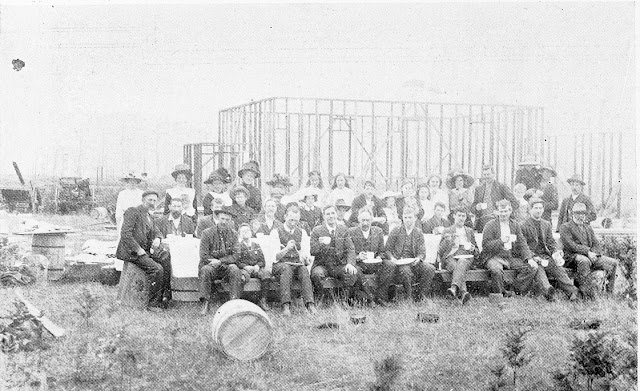
Henrietta is a rural settlement on the Murchison Highway approximately 30 kilometres south of Burnie. It is situated between the junctions of Takone Road and East Yolla Road. The closest town to Henrietta is Yolla, about 5 kilometres distant. Early Baptist services at Henrietta were held in a house belonging to Mrs Graue. After this services were held in the Henrietta hall which was built in about 1912. In 1914 a visitor passing through the district described the settlement: “We are now on the borders of Henreitta Plain, the extent of which is one thousand acres. Here is also the Henrietta town reserve, the only buildings on which are a small homestead owned by Mr W. Diprose, and a hall erected by Mr S.J. Smith, in which services are held alternatively by the Baptists and Methodists. There are a number of settlers on the plain, but not on the main road…”. In October 1915 the North West Post reported that the Baptist’s had purchased the hall, (which had closed), for £80. An amount of £6...
No. 1055 - Longford - Riverlands Church

Image
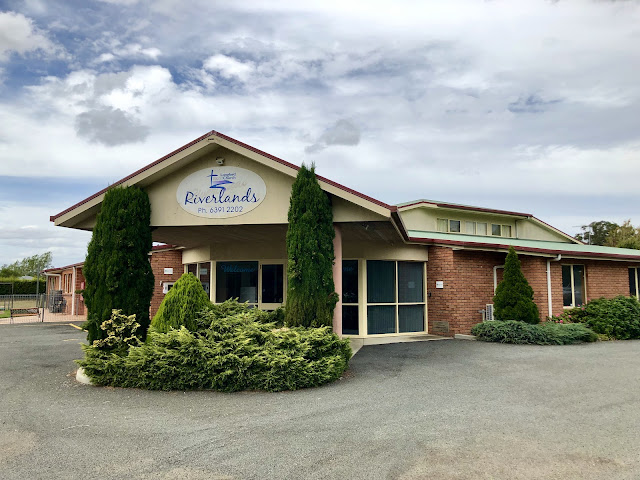
Longford is an historical country town approximately 25 kilometres south of Launceston. The district around Longford was first known as the Norfolk Plains after the Norfolk Islanders who were resettled here in 1813. The settlement was originally called Latour and in 1833 it was renamed Longford Riverlands Church is the successor to the Longford Baptist Church. The Baptist church was formally established in 1880 with opening of the Longford Tabernacle at 41 Wellington Street. In 1999 a new church and community centre was built to meet the needs of the Baptist community. The Longford Tabernacle was sold and a new building was erected at 159 Wellington Street. Initially the church retained its former name ‘Longford Baptist Church’ and the building only became known as ‘Riverlands’. After 2004, the name ‘Riverlands’ became the name of the church as well. Additional information about this church is welcomed as all articles are updated. I can be contacted through this page or my Facebook pag...

No. 1029 - Hobart - Elizabeth Street Baptist Church

Image
Hobart’s Baptist Church, or Tabernacle, opened in January 1889. While the Baptist presence in Hobart dates back to 1835, it was the arrival of Irish born preacher Rev. Robert McCullough, supported by William Gibson of Native Point, the benefactor of tabernacles at Deloraine, Longford, Launceston and Latrobe; that revived the Baptist cause in the city. The Hobart Tabernacle is the third place of worship built at the Elizabeth Street site. The history of the Tabernacle’s development is succinctly outlined in an article in the Hobart Mercury, published at the time of the laying of the building’s foundation stone in 1887: “The history of the Baptist cause in Hobart, or at least that portion of it over which Pastor McCullough exercises spiritual charge, is not a long one. Just four years ago - on the first Sunday in October, 1883 - he commenced preaching in the Exhibition building, and kept it up for some time with success, until at last the use of the building was taken from him. It was hi...

No. 957 - George Town - Baptist Church

Image
George Town is one of the oldest towns in Australia and is the second oldest town in Tasmania. It is therefore unusual that most of the town’s churches were only established after World War Two. The emergence of Launceston as the administrative centre of the North in the early years of the colony meant that George Town was destined to remain a backwater until more recent times. The construction of an aluminium smelter at nearby Bell Bay in the 1950s as well as the development of industry south of the town, accelerated George Town’s population growth in the post-war era. George Town’s Baptist Church is situated on Goulburn Street adjacent to St Andrew’s Uniting Church. The church was established in August 1958 and religious services were held in the Town Hall. A building site was subsequently purchased and a church hall was officially opened on 12 August 1961. An extension to the building was completed in 1990. Additional information about this church is welcomed as all articles are con...

No. 948 - Claremont Baptist Church

Image
Claremont is a suburb of the City of Glenorchy within the Greater Hobart region. It is named after Claremont House built in the 1830s by Henry Bilton. Claremont was once the site of an army training camp established during the Great War. At this time the area had only a few scattered houses and a railway station in a largely rural setting. From the 1950s public housing was built at Claremont which resulted in significant population growth. Baptists had a presence in the Claremont district as early as 1900 but ceased activity following the establishment of a Congregational church. It was not until the 1960s that a Baptist community emerged at Chigwell and along Abbotsfield Road. In 1964 the Abbotsfield Baptist Fellowship was established. In 1966 the Glenorchy Council granted the Baptist Fellowship a block of land on Cullen Street. The rapid growth of the suburb made the construction of a church inevitable. Building began on the Cullen Road site in 1970 and the church opened on Sunday ...

No. 933 - Devonport - Parker Street Baptist Church Hall (1953-1988)

Image
Devonport was established in 1890 with the merging of two towns on the opposite banks of the Mersey River; Formby on the west bank and Torquay on the east bank. The area was first settled in the 1840s. The Park Street Baptist church Hall in West Devonport was built in 1953 to accomodate a Baptist Sunday school which had been previously held in a private home. The hall was built on donated land and constructed by voluntary labour. The official opening of the hall on Saturday 3 May is recorded in the Advocate: “Adherents of the Baptist Church from many parts of Tasmania attended the opening and dedication of the Baptist Church Hall in Parker St., Devonport, on Saturday afternoon. The function was performed by the general secretary of the Baptist Union in Tasmania (Rev. E. E. Watson). The opening ceremony and dedication were presided over by the minister of the Devon port Church (Rev. Max D. Brewer)…..Mr. Watson brought the greetings and congratulations of the Baptist Union. He declared t...

No. 912 - Lenah Valley - Baptist Church

Image
Lenah Valley is a suburb of Hobart situated in the shadow of Mount Wellington north of the city centre. Lenah Valley was originally known as Kangaroo Bottom and later as Kangaroo Valley. Lenah is the native Aboriginal word for kangaroo. The Lenah Valley Baptist Church, now called Citywide Baptist Church, is located on Pottery Road. Baptist activity at Lenah Valley dates back to 1948 when a Sunday school was established. Church services were held for the first time in February 1952. A manse to house the first minister was acquired in July 1954. The site of the present church was purchased in June 1956. In July I960 the foundation stone was laid for a modern brick church and hall which opened in November 1960. The church, designed by architect Dirk Bolt, has been significantly altered in recent years.   The church is also home to the Hobart Nepali Church which was founded in 2010. It is the only congregation of Nepalese people in the Hobart, where Nepalese believers can practi...

No. 910 - Forest Baptist Church - "The Carpenter Cleric"

Image
Forest is a small settlement off the Bass Highway about 12 kilometres south of Stanley in Tasmania’s far North West. The early settlers referred to the area as "the forest" and when an official name was needed it became simply “Forest”.  For a time locals referred to the settlement as “Tierney’s Town”. Forest and the surrounding district has been home to numerous churches, most of which have closed and no longer exist.  The settlement at Forest centres on the intersection of Mengha Road and Back Line Road. Three churches were established near this intersection: St Bartholomew’s Anglican church (1905); a Union Church (1894) - now the Forest Christian Centre (Christian Brethren) and a short-lived Baptist church established in 1913. In 1918 a visitor to Forest mentions all three churches: “Now we come upon that pretty, quaint-looking Church of England—St. Bartholomew’s—the inside of which is well worth a visit. It has almost within a stone’s throw two other less pretentious-look...

No. 879 - Moonah Baptist Church (1908-2002) - "Celebrating the Baby"

Image
Moonah is a suburb of Greater Hobart and is located approximately 5 kilometres north of the central business district. Moonah was previously known as South Glenorchy before it was developed as a residential area in the late 19th century. The Moonah Baptist church, which was located at 187 Main Road, no longer exists. In 2004 it was demolished to make way for a commercial development. The church was opened in 1907 as a mission of the Hobart Baptist Tabernacle. The proceeds of the sale of the old Baptist chapel in Harrington Street [ see no 631 ] was used to fund the establishment of the new Moonah church. In December 1906, the extension of the Baptists to Moonah began with the establishment of a committee comprising Dr. Harry Benjafield, J.T. Soundy, F.W. Heritage (Church Treasurer) and David Williams (Church Secretary). The foundation stone for a new church was ceremonially laid on Saturday 1 February 1908 with the event recorded by the Hobart Mercury: “In an interval between the sho...

No. 875 - Devonport - Formby Protestant Hall and Baptist Church (1887-1904)

Image
Devonport was created in 1890 with the merging of two towns on the opposite banks of the Mersey River: Formby on the west bank and Torquay on the east bank. The area was first settled in the 1840s. Devonport’s first Baptist church was established in 1889 following the purchase of a former Protestant Hall in Stewart Street. The Protestant Hall was built by Mr Thomas Pressland Cowle, a prominent businessman, land owner and member of the first Formby Town Board. Cowle was actively involved in the development of Devonport and was a staunch supporter of town improvement and charities. The Protestant Hall opened on Monday 24 May 1887 with the occasion reported by the North West Post: "The opening concert in connection with the, building recently completed to the order of Mr Cowle took place last evening. The hall was fairly filled, and a musical treat was presented, which well repaid those those that assembled in spite of the sloppy state of the footpaths and roads. Before proceeding wi...

No. 866 - Boat Harbour Baptist Church

Image
Boat Harbour is a rural settlement situated on the Bass Highway, approximately 15 kilometres west of Wynyard. Boat Harbour gets its name from a nearby sheltered bay once called Jacobs Boat Harbour. Boat Harbour’s former Baptist church is situated alongside the Boat Harbour General Store. The church, which closed more than 40 years ago, is in fact the second Baptist church built on the site. The first church was built before the Great War following the establishment of a Baptist community in 1907. Before a church was built the Baptists’ met in the local schoolhouse. In May 1936 the original church was destroyed in a fire. The Launceston Examiner reported: “Shortly before midnight…a small Baptist Church at Boat Harbour was destroyed by a fire. A service was held in the building early in the evening. A store, owned by Mr. F. Hamilton,….which adjoined the church, was not damaged…”. A later report indicated that the fire was caused by “a cracker which ignited the dry grass underneath the bu...

No. 826 - South Hobart Baptist Church

Image
The South Hobart Baptist Church was established in 1942 in the former Cascades “Ragged School” in Upper Macquarie Street, South Hobart. The Ragged School movement began in Britain in the mid-nineteenth century, in response to the needs of growing numbers of urban poor. It had strong evangelical and humanitarian roots and aimed to provide a minimal education for vagrant, neglected and destitute children. Four Ragged Schools were established in Hobart to keep neglected children off the streets and in school. Three of these schools were run by the Hobart Town Ragged School Association: Watchorn Street (1854), Wapping (1855) and Cascade Road (1865). As living standards increased and as the State provided free education, Ragged Schools became redundant and the Association was dissolved in 1911. The Cascade Ragged School was located at 469 Macquarie Street (near Darcy Street) was built in 1865. A report in the Hobart Mercury in August 1865 provides a few details about the building: “No time...

No. 722 - Wynyard Baptist Church

Image
Wynyard is a town on the North West coast approximately 20 kilometres west of the city of Burnie. The area around Wynyard was originally named Table Cape by the explorers Bass and Flinders. The name was changed to Wynyard in the 1850s, in honour of Edward Buckley Wynyard, Lieutenant-General of the New South Wales Corps. In his capacity as commander of troops in New South Wales, Van Diemen’s Land and New Zealand, Wynyard visited Table Cape in 1850-1. Wynyard’s Baptist Church is located on the corner of Hogg Street and Dodgin Street. The church was built in the early 1970s, replacing an earlier building, which is now the Baptist Hall. The Baptist church’s origins at Wynyard date back to 1905 when a branch of the church was established. In November 1905, Launceston’s Examiner reported: “An endeavour is being made to establish a branch of the Baptist Church in Wynyard, and a mission conducted by Paster Williamson has been carried on during the past week. The meetings have been fairly atte...

No. 656 - Stowport - The Baptist Mission Hall - "In true Masonic fashion"

Image
Stowport is a village situated in the hills south east of the city of Burnie. The main part of the settlement is centred around the junction of the Stowport and Upper Stowport Road. It is an area that was first settled by employees of the Van Diemen's Land Company. The first two decades of the 20th century saw the establishment of a number of churches in the Stowport district. A ‘Protestant Hall’ that was built in 1889 became the Methodist church that was moved next to the Stowport Public Hall in 1919. Another Methodist church opened at Upper Stowport in 1908 and St Raphael’s Anglican church, also at Upper Stowport, opened in 1910. Stowport’s Public Hall was built in 1907 and this was used by Anglicans and Baptists as a place of worship. Then in 1908 the Baptists built their own church at Stowport which functioned for about 15 years. The foundation stone for the Stowport Baptist church, or Mission Hall, as it was sometimes called, was laid in a ceremony conducted on Thursday 30...