Posts

Showing posts with the label North East Tasmania

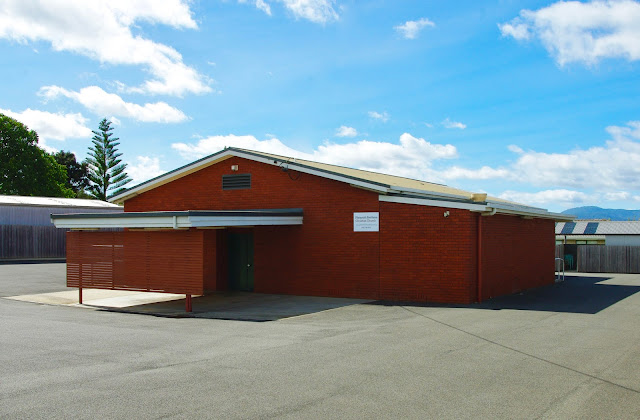
No. 1053 - St Helens - St Helena & St Stanislaw Catholic Church (1871-1922)
Image
St Helens is the largest town on Tasmania’s east coast. It was a whaling station in the early 19th century and when tin was discovered in the hinterland in the 1870s, St Helens developed as a port for the mines. The focus of this article is on St Helens’ original Catholic church which was replaced by the present church 100 years ago. Records of the establishment of the first church are very patchy and the precise date of its construction is not known. It was most likely built in 1871 for it is recorded that the foundation stone of the second church, laid in 1921, took place “50 years after the first church was built”. Catholic worship at St Helens dates back to the 1860s. Walch’s Almanac (1870) refers to Fr. M.J. Beechinor from Campbelltown attending the parishioners at St Georges Bay, which was an earlier name for the settlement. The first direct reference to the church dates to July 1876. A description of St Helens published in the Hobart Mercury mentions that a Roman Catholic Cha...

No. 917 - Retreat - Methodist Church - "A record year for Retreat"

Image
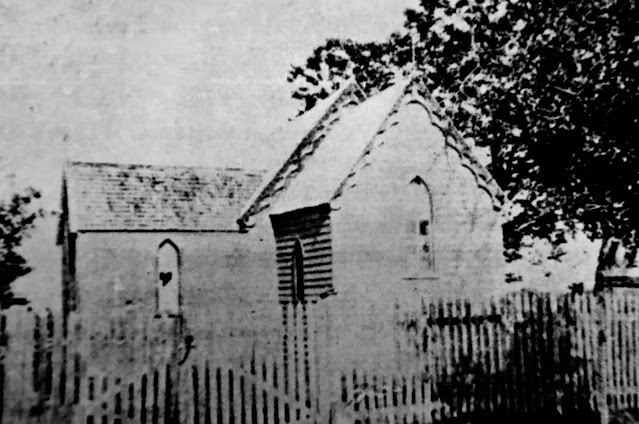
Retreat is a district north west of Lebrina in North East Tasmania. A settlement at Retreat centred on the junction of Retreat and Security Roads. In the 1920s and 1930s the settlement had a school, post office and a Methodist church. Nothing now remains with area now covered with pine plantations. Very little is know about the Retreat Methodist church which fell under the Lilydale Circuit. This included Methodist churches at nearby Tunnel and Lebrina. The Retreat church is not listed in Max Stansall’s Tasmanian Methodism (1975) as the church had ceased operating by the mid 1930s. A single photograph of the church exists which reveals that the church was probably a converted cottage. It is likely that the Retreat church and school are one and the same building. Only a handful of newspaper reports exist which provide little information about the church’s origins or demise. One of these, published in the Launceston Examiner in 1928, provides a glimpse of Methodist life at Retreat: “...

No. 913 - St Marys - Our Lady of the Assumption Catholic Church

Image
St Marys is a small township at the junction of the Tasman Highway and the Esk Highway on the East Coast of Tasmania. It was once the eastern terminus for the Fingal Railway. The town is part of the Break O'Day Council. Our Lady of the Assumption is the second Catholic church built at St Marys. The first church, a weatherboard building which opened in 1899, was destroyed in a fire in 1974. A new brick church, designed by Father Mitchell of Taroona was built as its replacement. The new church was opened on 9 May 1975 by Archbishop Guilford Young. The church is one of five Catholic churches in St Marys parish which covers the Fingal Valley and the North East coast.

No. 908 - St Marys - Holy Trinity Anglican Church

Image
St Marys is a small township at the junction of the Tasman Highway and the Esk Highway on the East Coast of Tasmania. It was once the eastern terminus for the Fingal Railway. The town is part of the Break O'Day Council.  Holy Trinity Anglican Church is a modern functional building which replaced a timber church built in 1896.  The foundation stone of the first church is on display in the foyer of the new building while the original bell hangs in a small bell tower near the entrance to the church.  Construction of the new church was completed in March 1988. The building was dedicated by Bishop Newell on Palm Sunday, 27 March 1988. Holy Trinity is part of the Break O’ Day Anglican parish which comprises of two other churches; one at St Helen’s and the other at Pyengana. * All photographs used in this article are my own. Links of Interest: https://www.facebook.com/anglicanbod/

No. 867 - Gladstone - St Michael's Catholic Church (c.1895-1969)

Image
Gladstone is a small and remote settlement situated on the banks of the Ringarooma River in north east Tasmania. It was first settled in 1870 by tin miners; a large number of whom were Chinese. In 1880 the discovery of gold in the area boosted the town’s population but once this was exhausted tin mining became the mainstay of the local economy. Gladstone is named after British Prime Minister, William Ewart Gladstone, who had also served as Colonial Secretary. At its peak three religious denominations were represented in the town with Catholic, Anglican and Presbyterian churches established. Gladstone’s churches have closed but two of the buildings have survived and have been converted into houses.   In the 1880s religious services took place in Gladstone’s Town Hall. In 1884 a visitor to the town commented: “The township possesses a Town Hall, a corrugated iron building fifty feet long, and twenty-four feet wide; it has a capital floor and a small stage. This building does dut...

No. 811 - Derby - Salvation Army Hall (1913-1946)

Image
In the 1870’s the discovery of large deposits of cassiterite led to the founding of the township of Brothers’ Home on the Ringarooma River in north east Tasmania. It 1885 the settlement was renamed Derby and by the close of the 19th century its population peaked at around 3000. In 1876 various tin mining leases, including the ‘Brothers Mine’, were amalgamated as “The Briseis”. The Briseis Tin Mining Company dominated the town until the great flood of 1929 when the Briseis Dam burst, devastating the town and inundating the mine. Neither the town nor the mine fully recovered from this disaster. At its peak, four religious denominations had a presence in Derby, including the Salvation Army, which opened a hall in 1913. Catholic, Methodist and Anglican churches had been built by the early 1890s while the Salvation Army had been content to use the town hall as a place of worship for almost 20 years. The Salvation Army first appeared at Derby in June 1887. In that month Derby’s local corr...

No. 786 - Scottsdale - Plymouth Brethren Christian Church

Image
Scottsdale is the largest town in north-east Tasmania. It is named after the Government Surveyor, James Scott, who explored the region in the 1850s. Scottsdale is viewed as part of Tasmania’s Bible belt having 10 places of worship in a town with a population of a little over 2000. The Exclusive Christian Brethren, now known as the Plymouth Brethren, originated in Plymouth, Great Britain, in the 1820s. By the mid 19th century the movement had spread to Australia. The 'Exclusive Brethren' is a restrictive group which broke away in 1848. In 2012 the Exclusive Brethren adopted the name 'Plymouth Brethren Christian Church'. Tasmanian Plymouth Brethren churches are part of global organisation with about 50 000 members. The Plymouth Brethren are known for avoiding social interaction with people outside the faith, which has contributed to it being viewed as a somewhat controversial Christian sect. The Plymouth Brethren Church should not be confused with the 'Open Brethre...

No. 764 - Mathinna - The Presbyterian Church

Image
The settlement of Mathinna in the upper reaches of the South Esk River Valley is now a shadow of the thriving boom town of the late 19th century. The discovery of gold accelerated the growth of the settlement after the 1870s and the establishment of the Golden Gate mine briefly turned Mathinna into the third largest town in Tasmania. Today less than 150 people live in the township. Soon after the arrival of the miners, three denominations were established at Mathinna in quick succession. An Anglican church (1896), a Methodist church (1896) and a Catholic church (1897) feature prominently in the photograph used at the head of this article. A fourth church, which is not visible, was a Presbyterian church. This was established in 1901 in a former Salvation Army Hall that had opened in March 1897. Why the Salvation Army did not prosper at Mathinna is not clear but four years after the opening of the Salvation Army Hall, it was sold to the Presbyterians. In January 1901 the Daily Telegrap...

No. 763 - Gray - "The Island" Methodist Church

Image
Gray is a hamlet situated about 6 kilometres south east of the town of St Marys in the Break O’ Day local government area. Two churches were built at Gray; an Anglican church, St Barnabas, established in 1904, and a Methodist church, which opened in 1899. In 1903, a visitor to the St Marys passing through Gray commented on the progress made in the district, including the recently opened Methodist church: “On going out to the Gray Settlement I was surprised to see the improvements that have been effected. The country has been opened up, so that while travelling along the main road one can see the little holdings and the homesteads, some on the hills, the others in the valleys. Passing along this road, one catches a fine view of the East Coast…. A good deal of this country is limestone formation, and splendid for grass. A few of the farmers are building new homes, and others are contemplating doing so, as I could see the timber stacked for that purpose….A new Wesleyan church has been b...

No. 758 - Storys Creek - The Church of the Ascension

Image
Storys Creek* is a former tin and tungsten mining township situated at an altitude of 750 metres on the southern slopes of Ben Lomond, Tasmania’s second highest mountain. It is named after a stream that ran through land owned by John Story. Mining activity at Storys Creek began soon after the discovery of tin oxide by two prospectors in 1881. By the mid 1880s two mining operations, the Ben Lomond and Storey’s Creek Companies were active and a substantial township was established. In 1884 a report in the Hobart Mercury described the settlement: “The camp has the proportions of a township, and is 11 miles from Avoca, along, on the whole, a fair bush road, but very steep in rising the hills. Very severe work on cattle when the heavy machinery for the mines went up. It has a store and post office.” By the mid 1920s a public hall, school and general store had been established and the permanent population had reached well over 200. However, a church was not opened until the 1950s.  In ...

No. 745 - Lottah's Catholic Churches (1885-1891 & 1914-1922)

Image
Lottah is a former mining settlement located in the Blue Tiers about 35 kilometres west of St Helens. There are now few signs of the once thriving town. Tin was discovered in the vicinity of Lottah in about 1875. The Anchor Tin Mine became operational in 1880 and the township of Lottah developed around it. At its peak Lottah had several hundred residents, a school, two hotels, two churches, a number of businesses and a football club. Two Catholic churches were built at Lottah. The first church was built in 1885 and a second church, built in 1914, was removed to Pyengana in 1922. The original church, which was a converted billiard hall, was destroyed in a fire in 1891. In May 1885 Lottah’s correspondent for the Hobart Mercury reported the construction of the township’s first church: “In local news I may mention that Father Mary has purchased a building at the junction for his church, and it is now being altered and enlarged. It is already assuming the appearance of a nice church. ...

No. 730 - Lebrina - St Patrick's Catholic Church

Image
Lebrina is a small village situated approximately 10 kilometres north of Lilydale in North East Tasmania. The settlement was earlier know as Hall’s Track before the name Lebrina was adopted when railway station on the North-eastern line was built. Lebrina is derived from an aboriginal word meaning "house" or "hut". Lebrina once had three churches: a Methodist church, an Anglican church dedicated to St Andrew and St Patrick’s Catholic Church. Reports of the St Patrick’s church published in the region’s newspapers are sparse and I have yet to find a photograph of the building which has long gone. The church opened December 1931 in a building previously used as a Druid’s Hall. The Ancient Order of Druids, a fraternal society, established a Lodge at Lebrina in 1909 which was named “Dreadnought No. 34”. Fifteen years were to pass before the Druids built a hall in the township. In July 1925 Launceston’s Examiner reported on the opening of Lebrina’s new Druid’s Hall: “T...