Posts

Showing posts with the label Church of Christ

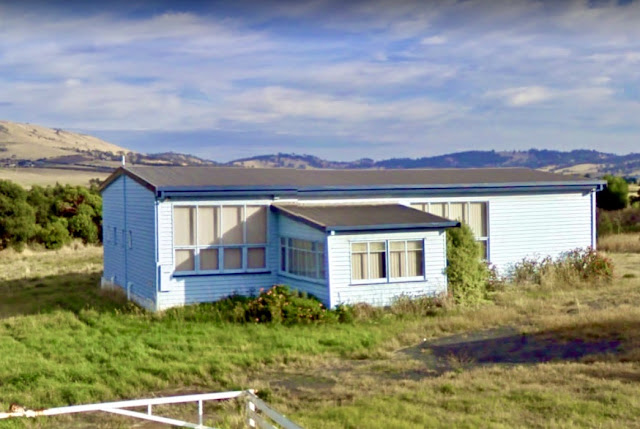
No. 1082 - Cubit's Creek Meeting House (1911-1956)

Image
I will be posting a series of very short articles about minor churches that have left little trace in the historical or photographic record. Among the objectives of this blog is to create a definitive catalogue of all churches and other places of worship that have existed in Tasmania since settlement. My hope is that the publication of some basic details about these buildings on this blog might result in further information and historical images coming to light. Cubit’s Creek is a locality in the Caveside district which is close to Mole Creek in Tasmania’s north. Cubit’s Creek Meeting House was the predecessor of the Caveside Church of Christ that was built in 1956. In the 1870s the Church of Christ arrived in Tasmania and first established itself in Launceston and Hobart. Initially the denomination was simply known as the ‘Christians' then from 1885 as 'Disciples of Christ' and finally as 'Churches of Christ'. The Churches of Christ formed numerous congregations ac...

No. 1054 - Hobart - Hobart City Church of Christ

Image
Hobart City Church of Christ is situated in a building converted for use as a church on a site between Goulburn and Liverpool Streets in the central business district. The church was established in 1872 and originally worshipped in the Christians Chapel in Collins Street. It moved to the present site in 1991. The history of the original building will be the subject of another article on ‘Churches of Tasmania’. The Church of Christ arrived in Tasmania in the early 1870s. Initially the denomination was simply known as the ‘Christians' then from 1885 as 'Disciples of Christ' and finally as 'Churches of Christ'. The Churches of Christ believe that Christian communities should be similar to those described in the New Testament; simple and with autonomous congregations. The Church of Christ has similarities with the [Open] Christian Brethren, although it is influenced by American rather than British churches. Additional information about this church is welcomed as all art...

No. 984 - West Hobart - Church of Christ

Image
West Hobart is an inner-city suburb of Hobart immediately west of the city centre. The suburb occupies the high ground below Knocklofty Hill. The former "Hill Street Church" located between Pine and Warwick Street, was built with the support of the Collin's Street ‘Church of Christ’ in the 1920s. In the 1870s the Church of Christ arrived in Tasmania and established itself first in Launceston and Hobart. Initially the denomination was simply known as the ‘Christians' then from 1885 as 'Disciples of Christ' and finally as 'Churches of Christ'. The Churches of Christ believed that Christian communities should be similar to those described in the New Testament, simple and with autonomous congregations. The Church of Christ has similarities with the Christian Brethren, although it is influenced by American rather than British churches. The establishment of the church is outlined in an article in the Hobart Mercury, published at the time of the church’s offi...

No. 805 - Mornington - Eastern Shore Church of Christ

Image
Mornington is an eastern shore suburb in the City of Clarence and a part of the Greater Hobart region. Mornington was developed as a housing commission estate by the Tasmanian Government Housing Department in the late 1960s. The suburb is named after an old farming property established in the mid 19th century. The ‘Churches of Christ’ believe that Christian communities should be similar to those described in the New Testament, with simple and autonomous congregations. The Church of Christ has some similarities with the Christian Brethren, although it is influenced by American rather than British churches. The first members of the Church of Christ arrived in Tasmania in 1865. In the 1870s churches were set up in Launceston and Hobart. The first followers were initially known as ‘Christians' then from 1885 as 'Disciples of Christ' and from 1915 as 'Churches of Christ'. The Eastern Shore Church of Christ was established at Mornington in 1974. The church is a modest bri...

No. 775 - Howrah - Church of Christ

Image
Howrah is a suburb of Hobart situated on the eastern side of Bellerive on the shores of the Derwent River. It is named after "Howrah House", a property built in the 1830's on the Clarence Plains by a retired Indian Army officer, Captain James Fielder. Howrah is a suburb of Calcutta, where Captain Fielder was stationed. Howrah has had five religious denominations active in the suburb since it was was settled. The ‘Churches of Christ’ believe that Christian communities should be similar to those described in the New Testament, with simple and autonomous congregations. The Church of Christ has some similarities with the Christian Brethren, although it is influenced by American rather than British churches. The first members of the Church of Christ arrived in Tasmania in 1865. In the 1870s churches were set up in Launceston and Hobart. The first followers were initially known as ‘Christians' then from 1885 as 'Disciples of Christ' and from 1915 as 'Churches ...

No. 770 - Midway Point - Church of Christ

Image
Midway Point is a small dormitory town in the local government area of Sorell. It is located at the southern tip of the Frogmore Peninsula where the Arthur Highway is carried by the Sorell Causeway. The ‘Churches of Christ’ believe that Christian communities should be similar to those described in the New Testament, with simple and autonomous congregations. The Church of Christ has some similarities with the Christian Brethren, although it is influenced by American rather than British churches. The first members of the Church of Christ arrived in Tasmania in 1865. In the 1870s churches were set up in Launceston and Hobart. They first followers were initially known as ‘Christians' then from 1885 as 'Disciples of Christ' and from 1915 as 'Churches of Christ'. The Midway Point Church of Christ was situated on Penna Road on the northern outskirts of the town. The church closed around 2009 and the building was left unoccupied. Unfortunately the church was badly damage...

No. 731 - Huonville Community Church

Image
Huonville is a small town on the banks of the Huon River which is situated approximately 35 kilometres south of Hobart. Huonville was not originally intended to be the site of a town as a nearby settlement at Ranelagh (then called Victoria) was planned as the main centre of the district. However Huonville’s location at a bridge crossing the Huon River led to it supplanting Ranelagh as the larger of the two settlements. The Huonville Community Church describes itself as “an independent Bible believing Christian Church affiliated with Churches of Christ in Victoria and Tasmania”. The church which is situated on Huonville Main Road is built in a style resembling that adopted by the Seventh Day Adventist Church in the 1960s and 1970s. However, the building is a former Congregational Church that was built in 1965, replacing an earlier stone church which stood at the intersection of Wilmot Street and Main Road. The new brick building was probably one of the last Congregational churches b...

No. 460 - The Newnham Church of Christ

Image
Newnham is a northern suburb of the city of Launceston. Originally part of the municipality of Lilydale, Newnham was proclaimed a town in 1946. There are several active Christian communities in Newnham including the Uniting Church, an Anglican church, a chapel at Aldersgate, the Christian Brethren and the Church of Christ. In the 1870s the Church of Christ arrived in Tasmania and first established itself in Launceston and Hobart. Initially the denomination was simply known as the ‘Christians’ then from 1885 as 'Disciples of Christ' and finally as 'Churches of Christ'. The Churches of Christ formed numerous congregations across the north of the Tasmania but are especially well represented in the north-west. The Church of Christ has been well represented in Launceston with the first permanent church opening on Margaret Street in 1912. Established in the 1980’s, the Newnham church is an unpretentious and unadorned building and as such is typical of most places of worship a...

No. 432 - Caveside Church of Christ - "The Church in the Paddock"

Image
Caveside is rural community approximately 30 kilometres south west of Deloraine. Until 1897 it was known as Brookside but was renamed Caveside reflecting the abundance of sinks holes and caves in the region. In the 1870s the Church of Christ arrived in Tasmania and first established itself in Launceston and Hobart. Initially the denomination was simply known as the ‘Christians' then from 1885 as 'Disciples of Christ' and finally as 'Churches of Christ'. The Churches of Christ formed numerous congregations across the north of the Tasmania but especially in the north-west. The Church of Christ was established at Caveside when a church or “meeting house” was built near Cubit’s Creek in 1911. The building was completed in 6 days and three opening services were held on Sunday 21 May. The building was a simple split-timber structure but it was sturdy enough to last the community for 40 years. Plans for a new church were submitted to the Deloraine Council in 1950 but six ...

No. 388 - The Ulverstone Church of Christ

Image
In the 1870s the Church of Christ arrived in Tasmania and established itself first in Launceston and Hobart. Initially the denomination was simply known as the ‘Christians' then from 1885 as 'Disciples of Christ' and finally as 'Churches of Christ'. The Churches of Christ developed numerous congregations across the north of the Tasmania but especially in the north-west. Church of Christ meetings were held at Sulphur Creek from 1898 and at the Rechabite Hall at Penguin from January 1905. By the end of that year a church was established at South Road about two miles outside Penguin, on the road to Ulverstone. The church was built by Mr Robert Hutton on his own property and opened on Sunday 24 December 1905. [ See No. 376 ] The establishment of a Church of Christ community in West Ulverstone in 1908 meant that the majority of the church’s members were located some distance from the South Road church. Services were held in homes at Ulverstone and although worshippers ...

No. 376 - The South Road Church of Christ - "A Great Convenience"

Image
In the 1870s the Church of Christ arrived in Tasmania and established itself first in Launceston and Hobart. Initially the denomination was simply known as the ‘Christians' then from 1885 as 'Disciples of Christ' and finaly as 'Churches of Christ'. The Churches of Christ developed numerous congregations across the north of the Tasmania but especially in the north-west. Church of Christ meetings were held at Sulphur Creek from 1898 and at the Rechabite Hall at Penguin from January 1905. By the end of that year a church was established at South Road about two miles outside Penguin, on the road to Ulverstone. The church was built by Mr Robert Hutton on his own property and opened on Sunday 24 December 1905. The North Western Advocate reported: “A new place of worship has been erected on South road, in connection with the Church of Christ, and as there are a number of residents in this locality who might find it a difficult matter to reach Penguin or Ulverstone to atte...

No. 360 - The Church of Christ at Mole Creek - 'Grew Like a Mushroom'

Image
Mole Creek is a town in the upper Mersey Valley, in the central north of Tasmania. The name Mole Creek comes from a nearby stream, portions of which disappear underground and flow through the caves in the area. In January 1918 the Weekly Courier published a set of photographs with the intriguing headline; “Progressive Mole Creek: Members of the Church of Christ build a church at Mole Creek…in a day”. While the church actually took a little longer than a day to build, it was nevertheless a remarkable achievement. In the 1870s the Church of Christ established itself in Launceston and Hobart. At first they were simply known as ‘Christians' then from 1885 as 'Disciples of Christ' and from 1915 as 'Churches of Christ'. The Churches of Christ developed numerous congregations but especially in the north-west of Tasmania. In 1911 a meeting house was erected at Cubit’s Creek at Caveside within the space of 6 days. Then in October 1917 an ambitious attempt was made to build a...

No. 353 - The Door of Hope at Glen Dhu

Image
A general approach taken in this blog is to record the history of all buildings in Tasmania designed or purpose-built as churches. In this entry I will deviate from this approach for two reasons. Firstly, as a part of the Church of Christ, ‘The Door of Hope’ has a long history in Launceston which goes back more than 130 years. Secondly, ‘The Door of Hope’ is located in a former factory, which itself is of historical significance and an iconic building that is representative of Launceston’s industrial era. The Church of Christ in Launceston was formed in August 1884 after an advertisement was placed in the Examiner calling for ‘Disciples of Christ’ to start a new church. With nine members, meetings were initially held in various private homes and halls. A mission tent was erected on the corner of the Kings Way and Brisbane Street in 1913 and almost 300 people “committed their lives to Christ”. In 1913 the Church of Christ purchased the former Catholic Apostolic Church (built in 18...

No. 335 - The Church of Christ at Devonport

Image
The Churches of Christ believe that Christian communities should be similar to those described in the New Testament, simple and with autonomous congregations. The Church of Christ has similarities with the Christian Brethren, although it is influenced by American rather than British churches. The first members of the Church of Christ  arrived in Tasmania in 1865, when the Fairlam family moved to Northdown near Latrobe and established a church there. In the 1870s churches were set up in Launceston and Hobart. They were initially simply known as 'Christians'; from 1885 as 'Disciples of Christ', and from 1915 as 'Churches of Christ'. The Church of Christ in Devonport began in 1910 when the Torquay Hall was hired from the town council for 10s. per week. Later, a mission tent operated in Rooke Street and in 1924 a wooden church was built in Oldaker Street. This operated for less than a year before it was sold with the proceeds going towards the construction of a b...