Posts

Showing posts with the label Christian Brethren

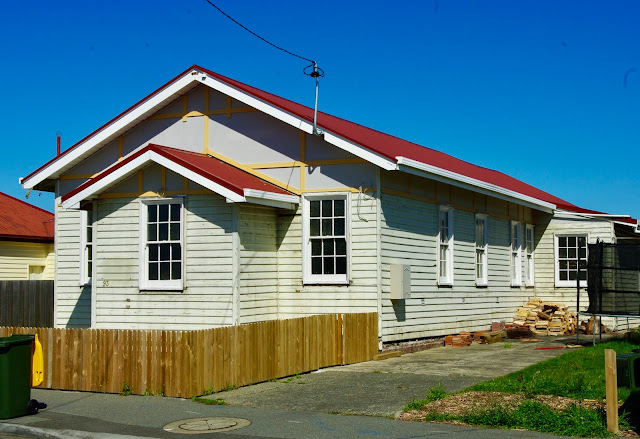
No. 1020 - Smithton Gospel Hall (1941-2016)

Image
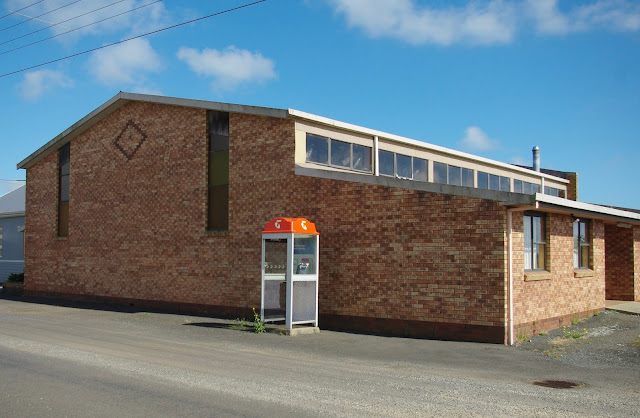
Smithton is the commercial and industrial centre of the Circular Head district in the far northwest of the island. The early settlement was known as Duck River but this was changed to Smithton in 1895. Smithton is named after an Irishman, Peter Smith, who had been a constable, and later the licensee of ‘The Plough Inn,’ at Stanley. Smith moved to Duck River after buying some 500 acres of land from the Poke and Ollington families. Smith’s successful enterprises enabled his return to Ireland. The Christian Brethren arrived at Circular Head in the late 1870s and the first regular services were held in a small hall at Scotchtown. In 1886 a Gospel Hall built on the King Street site. The focus of this blog entry is on the opening of a second hall on the same site in 1941. The history of the original hall will be the focus of a seperate article. In December 1941 the Circular Head Chronicle published a short report concerning the official opening of the hall as well as a description of the bui...
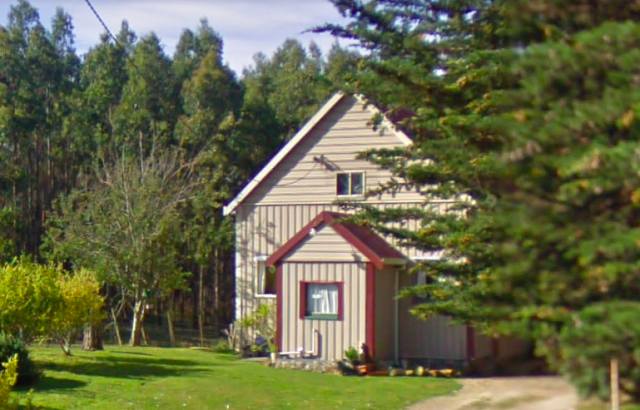
No. 1016 - Preolenna Gospel Hall (1924-1994)

Image
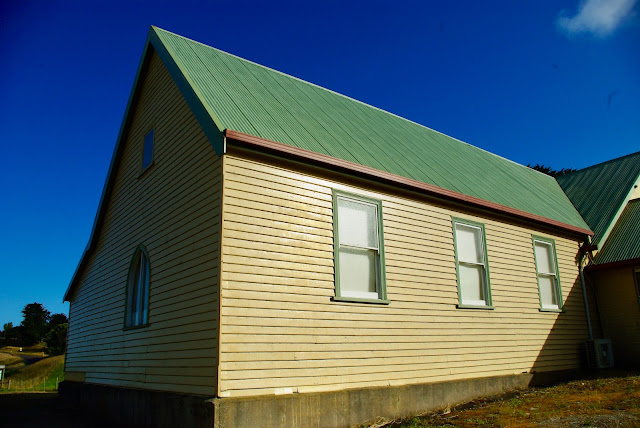
Preolenna is a small village at the junction of the Preolenna and Meunna Roads approximately 30 kilometres south of Wynyard. The first grants of land in the district were settled in 1910. In 1917 a tramway was constructed from Flowerdale to Preolenna to facilitate coal mining operations at the coal seams discovered in 1914. Preolenna is an Aboriginal word meaning 'to fetch or to bring’. Preolenna once had Baptist and Methodist communities which gathered for worship in the Preolenna Hall. The only church built at the settlement was a Gospel Hall which was constructed in 1924. In April 1924 the first working bee was held to clear land for the erection of a hall. A tender was for the construction of a building was awarded to Mr J. Sellers Jnr for an amount of £37. The official opening of the hall took place on Wednesday 12 November 1924 with the main speaker being Major Roberts-Thomson of Table Cape. Families associated with the establishment of the church include: Morse; Reeve; Hain...

No. 998 - Myalla Gospel Hall

Image
Myalla is a rural settlement south of Sisters Creek and the Bass Highway. The district was known as Myalla from about 1905 when roads were planned for the area. The railway from Burnie reached Myalla in 1913. At its peak, Myalla had three churches: an Anglican Mission Hall (1919), a Gospel Hall (1919) and a Baptist church (1923). Of these, only the Gospel Hall has survived closure. The Myalla Gospel Hall was officially opened on Wednesday 29 January 1919. A report in the Advocate provides a few details about the occasion: “A large assemblage from all parts of the district, and visitors from Sheffield, Ridgley, Burnie, and Forest, attended the opening services at the new hall which the Brethren have recently erected at Myalla. The hall was crowded at each of the services. Mr. Geo. Atkinson, of Burnie, opened the afternoon service…Mr. Atkinson then led the meeting in prayer, and afterwards spoke at some length on the need for such a building at Myalla, and expressed his pleasure at the ...

No. 997 - Forest - The Forest Christian Centre

Image
Forest is a small settlement off the Bass Highway about 12 kilometres south of Stanley in Tasmania’s far North West. The early settlers referred to the area as "the forest" and when an official name was needed it became simply "Forest". The Forest Christian Centre is situated at the intersection of Mengha Road and Backline Road. The church falls under the umbrella of the Association of Christian Community Churches in Victoria and Tasmania. The association describes itself as “a movement of like-minded local churches, predominantly of a Christian Brethren heritage, that have united under a common vision and mission, set of beliefs and core values”. The church was originally established as the Forest Union Church which opened in 1894. (This will be the subject of an upcoming article). The Union Church was to become the home of the Christian Brethren shortly after the turn of the 20th century. The original church adjoins the new hall which was constructed in the 1970s...

No. 942 - Hobart North - Hope Christian Centre

Image
The Hope Christian Centre is located in the former Sunbeam warehouse on Tasma Street, North Hobart. The fellowship moved from the Murray Street Gospel Chapel in December 2003, after 18 months of repurposing the building. The Hope Christian Centre falls under the umbrella of the Association of Christian Community Churches in Victoria and Tasmania. The association describes itself as “a movement of like-minded local churches, predominantly of a Christian Brethren heritage, that have united under a common vision and mission, set of beliefs and core values”. The Christian Brethren, also known as the Plymouth Brethren, originated in Great Britain in the 1820s. By the mid 19th century the movement had spread to Australia, with the first revival meetings held in Tasmania from 1869. As a result, fellowships were formed in Hobart, Launceston, the Huon Valley, Smithton, Sheffield, Wynyard, Burnie and Scottsdale by the end of the 1870s. The Brethren placed an emphasis on weekly communion, the bap...

No. 941 - Boat Harbour Church - 'The Rosevale Chapel'

Image
Boat Harbour is a rural settlement situated on the Bass Highway, approximately 15 kilometres west of Wynyard. Boat Harbour gets its name from a nearby sheltered bay once called Jacobs Boat Harbour. Since it was built in 1879, the Boat Harbour Church, which is a Christian Brethren community, has also been known as the Boat Harbour Gospel Hall; Bible Chapel and the Rosedale Chapel. The early years of the church are not well recorded. In 1880, a visitor to the North West coast, mentions the newly opened chapel on a journey from Stanley to Wynyard: “In sight of our military friend's residence, and the first dwelling towards which our footsteps tend, is a substantially-built cottage, with which is incorporated the Boat Harbour post office, kept by the agreeable and attentive postmistress, Mrs. Dean…. As the post-office fades from view, we near the tastefully-finished and recently painted residence of a Mr Blackwell, … Leaving Mr Blackwell's, we heave in sight of Mayne's hotel,...

No. 915 - Stanley - Christian Community Church

Image
Stanley is a historic town on the far northwest coast approximately 80 kilometres west of Burnie. The Van Diemen's Land Company once had its headquarters in the area which was originally known as Circular Head. It was later named after Lord Stanley, the Secretary of State for the Colonies, who went on to serve three terms as British Prime Minister. Stanley’s Christian Community Church location falls under the umbrella of the Association of Christian Community Churches in Victoria and Tasmania. The association describes itself as “a movement of like-minded local churches, predominantly of a Christian Brethren heritage, that have united under a common vision and mission, set of beliefs and core values”. The Christian Brethren, also known as the Plymouth Brethren, originated in Great Britain in the 1820s. By the mid 19th century the movement had spread to Australia, with the first revival meetings held in Tasmania from 1869. As a result, fellowships were formed in Hobart, Launceston, ...

No. 889 - Scotchtown Gospel Hall

Image
Scotchtown is a rural area on the northwest coast approximately 3 kilometres south of Smithton. The former Gospel Hall, which has been converted into a house, was established by the open Christian Brethren. The Christian Brethren originated in Great Britain in the 1820s. By the mid 19th century the movement had spread to Australia, with the first revival meetings held in Tasmania from 1869. Fellowships were established at Hobart, Launceston, the Huon Valley, Smithton, Sheffield, Wynyard, Burnie and Scottsdale by the end of the 1870s. As a lay movement with no ordained ministry, the Christian Brethren were ideally suited to rural communities. The Brethren placed an emphasis on weekly communion, the baptism of believers by immersion, and evangelism. The Christian Brethren should not be confused with the 'Exclusive Brethren, (now known as the Plymouth Brethren) a restrictive group which broke away in 1848. In Tasmania, most Brethren are ‘open’, unlike the 'exclusive' Brethren ...

No. 881 - Ravenswood Gospel Chapel

Image
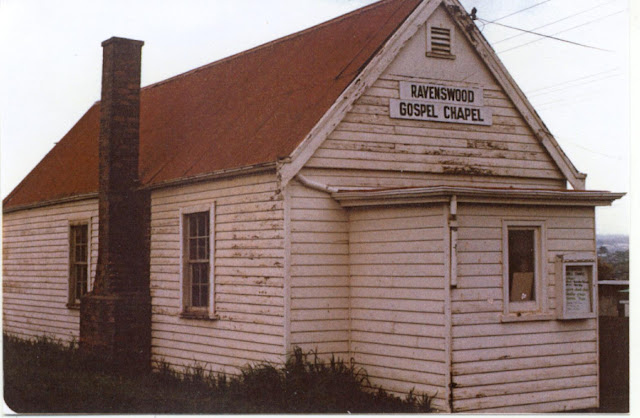
Ravenswood is a suburb north of Launceston which was one part of the former St Leonards Municipality. The suburb is named after the farmstead ‘Ravenswood’ which was established in the 1830s. The Ravenswood Gospel Chapel once stood near the intersection of Henry Street and Wildor Crescent before it was demolished in the 1970s. The chapel was originally the Ravenswood Christian Mission Hall, established by Henry Reed’s Christian Mission Church. The Mission opened in March 1883 and was built on land belonging to Robert Gibton. The Mission Hall operated for 25 years before it came under the control of the Baptists in either 1907 or 1908. A photograph published in the Weekly Courier (1909) shows the old Mission Hall opposite the Ravenwood Methodist Church adjacent to the old Ravenswood cemetery. The Baptist Mission fell under the authority of the Cimitiere Street Baptist Tabernacle. The Baptist’s used the hall until the late 1930s when it was closed for a period of time before reopening ...

No. 874 - Irishtown Gospel Hall

Image
Irishtown is small rural town on the Irishtown Road, approximately 10 kilometres south of Smithton. The area was first settled in the late 1850s when it was known as Upper Duck Creek. The Irishtown Christian Brethren Gospel Hall is located on Youngs Road about half a kilometre south of the main settlement. The Christian Brethren arrived in the Circular Head in the 1870s and places of worship were soon established at Scotchtown, Montagu, Marrawah and Smithton. I have yet to establish the origins of the Irishtown Gospel Hall but a Brethren hall was in operation in 1926. The Youngs Road hall appears to be a relatively recent building, perhaps replacing an earlier structure on the same site. Additional information about this church is most welcome as all articles are continually updated. I can be contacted through this page or my Facebook page "Churches of Tasmania" which is linked here: Churches of Tasmania . Sources: Circular Head Chronicle, Wednesday 25 January 1939, page 1

No. 859 - Kentish Gospel Hall (1875-1930)

Image
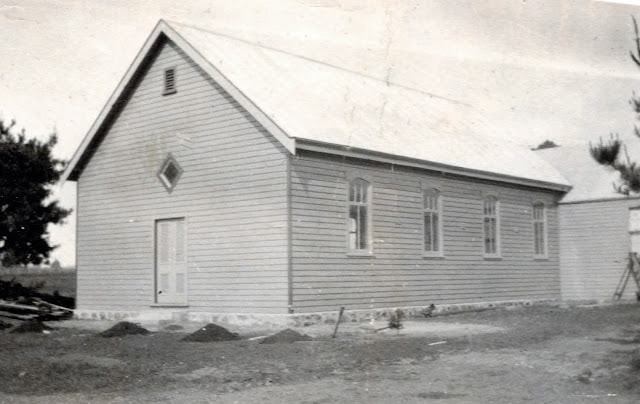
Kentish was a small settlement on the Kentish Road to the west of Sheffield. It is named after Government Surveyor Nathaniel Kentish, who with a party of 20 probationary convicts explored and surveyed the area in the early 1840s. The Kentish Gospel Hall is significant in that it is the first Gospel Hall established in Tasmania by the Christian Brethren. The Brethren were established in Ireland and England in the 1820s. The Brethren place an emphasis on weekly communion, the baptism of believers by immersion, and evangelism. The Christian Brethren should not be confused with the 'Exclusive Brethren, a restrictive group which broke away in 1848. In Tasmania, most Brethren are 'open', that is, they do not belong to the 'exclusive' Brethren who avoid contact with outsiders to the religion.  By the 1850s the Christian Brethren had arrived in Australia, with evangelists William Brown, Edward Moyse and Charles Perrin holding revival meetings in Tasmania from 1869. Historia...

No. 837 - Moonah - Hopkins Street Gospel Hall (1927-2018)

Image
Moonah is a suburb of Greater Hobart and is located approximately 5 kilometres north of the central business district. Moonah was previously known as South Glenorchy before it was developed as a residential area in the late 19th century. Very little information is available about this former Gospel Hall situated in Hopkins Street. The building was sold in 2018 and again in 2019. The hall has recently been converted into a house and the cladding has been removed and the weatherboard restored. The Gospel Hall, which belong to the Christian Brethren, opened on Sunday 13 November 1927. The former Moonah railway line once ran alongside the hall. Apart from an advertisement announcing the hall’s official opening, there are no newspaper reports describing this occasion or information about the building. Additional information about this former church and the building is most welcome as all articles are continually updated. I can be contacted through this page or my Facebook page "Church...

No. 829 - Rosevale Gospel Hall - "A Religious Embroglio"

Image
Rosevale is a rural settlement about 25km west of Launceston. Rosevale was previously known as Bridgenorth but was renamed in honour of local landholder, James Rose. The establishment of the 'Bridgenorth State school' some three or four miles away gave rise to some confusion prompting the adoption of the name Rosevale. James Rose arrived in Tasmania in 1854 to work for Robert Quayle Kermode of Mona Vale. He later left his service and purchased 200 acres of land at ’Bridgenorth’. Rosevale once had three churches, a Congregational church [1870]; a Gospel Hall built in 1876 and All Saints’ Anglican Church [1924]. The establishment of a Congregational church in 1870 brought an end to Rosedale’s “spiritual and intellectual destitution”, at least according to the Congregational Union and Mission of Tasmania:  “This locality (now called Rosevale) is on the West Tamar, some sixteen miles from Launceston, in the midst of a thickly timbered country. It is almost impossible to conceive o...

No. 781 - Roland - Christian Brethren Gospel Hall

Image
Roland is a rural village on the Staverton Road approximately 10 kilometres south of Sheffield. It was the railhead of a line that branched off the Main Line at Railton. The name of the settlement changed several times. At the time of the Great War, it was known as Staverton Railway, then it changed to Dasher (after the nearby river) until 1919. After that it became Roland, in honour of Captain Rolland, an early explorer in the district. In the summer of 1918, a year after the Rowland Gospel Hall had been built, a correspondent writing to the Weekly Times in Melbourne, described the settlement at Roland: “At the Staverton railway terminus, which is about 1½ miles from here, there is a store, a blacksmith's shop, shoemaker's, church, post-office, and weighbridge. The station is rapidly growing. When it was first built it consisted only of the station houses and  buildings. The station is a very busy place now, as all the ore from the Round Hill mine, and produce from Wilmot and ...

No. 771 - Midway Point - Christian Fellowship

Image
Midway Point is a small dormitory town in the local government area of Sorell. It is located at the southern tip of the Frogmore Peninsula where the Arthur Highway is carried by the Sorell Causeway. The Midway Point Christian Fellowship church is a member of the Christian Community Churches of Victoria and Tasmania. This is a movement of like-minded local churches, predominantly of a Christian Brethren heritage. The Christian Brethren, originated in Great Britain in the 1820s. By the mid 19th century the movement had spread to Australia, with the first revival meetings held in Tasmania in 1869. As a result, fellowships were formed in Hobart, Launceston, the Huon Valley, Smithton, Sheffield, Wynyard, Burnie and Scottsdale by the end of the 1870s. The Brethren placed an emphasis on weekly communion, the baptism of believers by immersion, and evangelism. The Christian Brethren should not be confused with the 'Exclusive Brethren’, a restrictive group which broke away in 1848. In Tasman...