Posts

Showing posts with the label 1990-1999

No. 1054 - Hobart - Hobart City Church of Christ
Image
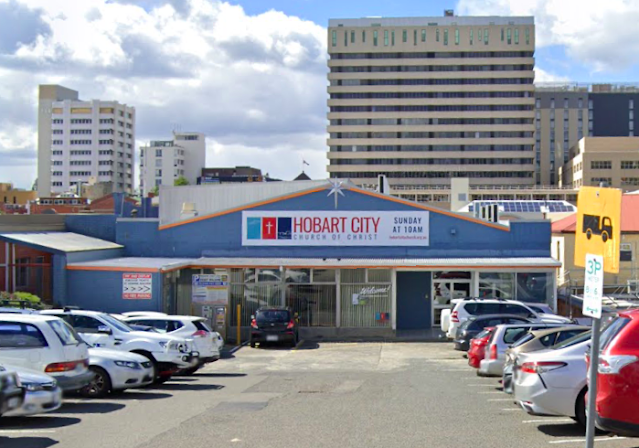
Hobart City Church of Christ is situated in a building converted for use as a church on a site between Goulburn and Liverpool Streets in the central business district. The church was established in 1872 and originally worshipped in the Christians Chapel in Collins Street. It moved to the present site in 1991. The history of the original building will be the subject of another article on ‘Churches of Tasmania’. The Church of Christ arrived in Tasmania in the early 1870s. Initially the denomination was simply known as the ‘Christians' then from 1885 as 'Disciples of Christ' and finally as 'Churches of Christ'. The Churches of Christ believe that Christian communities should be similar to those described in the New Testament; simple and with autonomous congregations. The Church of Christ has similarities with the [Open] Christian Brethren, although it is influenced by American rather than British churches. Additional information about this church is welcomed as all art...

No. 847 - Wynyard C3 Church Global

Image
Wynyard is a town on the northwest coast approximately 20 kilometres west of the city of Burnie. The area around Wynyard was originally named Table Cape by the explorers Bass and Flinders. The name was changed to Wynyard in the 1850s, in honour of Edward Buckley Wynyard, Lieutenant-General of the New South Wales Corps. C3 Church Global, formerly known as Christian City Church International, is a charismatic church founded by Phil Pringle and Christine Pringle. The first church was started in Dee Why on the Northern Beaches of Sydney in 1980. C3 Church Global now has over 500 churches worldwide. The C3 church was located in the former Kamarah Hostel of Wynyard High School. The hostel provided accommodation for students attending Wynyard High and Hellyer College in Burnie. The church acquired the building in 2001 and the building was extended and developed in 2006. The church closed in 2024 and the building was put up for sale.  The Wynyard church was one of four C3 Churches in Tasm...

No. 815 - Lutana - Plymouth Brethren Hall (1990-2017)

Image
Lutana is a northern suburb of Hobart located on the western shore of the Derwent River and adjacent to the Risdon zinc smelter and refinery. Lutana was originally called Risdon Rise. Following a naming competition run by the Electronic Zinc Company in 1920, when building their new housing estate, the name Lutana was chosen. Lutana is an aboriginal work for ‘moon’. The Exclusive Christian Brethren, now known as the Plymouth Brethren, originated in Plymouth, Great Britain, in the 1820s. By the mid 19th century the movement had spread to Australia. The 'Exclusive Brethren' is a restrictive group which broke away in 1848. In 2012 the Exclusive Brethren adopted the name 'Plymouth Brethren Christian Church'. Tasmanian Plymouth Brethren churches are part of global organisation with about 50 000 members. The Plymouth Brethren are known for avoiding social interaction with people outside the faith, which has contributed to it being viewed as a Christian sect. The Plymouth Br...

No. 788 - Deloraine - 'The Church of the Latter Day Saints'

Image
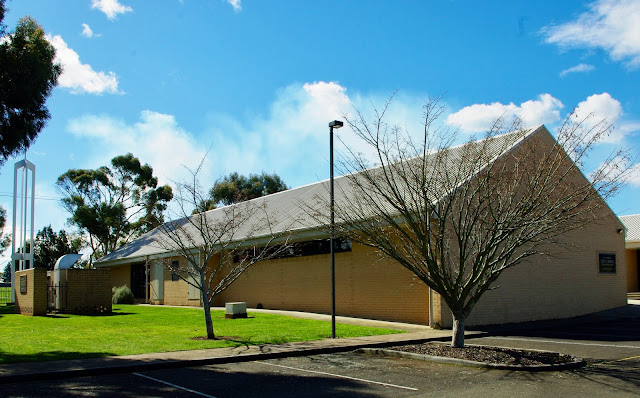
Deloraine is a historic tourist town situated on the Meander River and lies approximately halfway between the cities of Launceston and Devonport. The settlement dates to the 1830s and was named by the surveyor, Thomas Scott, after Sir William Deloraine, a character in Sir Walter Scott's poem "The Lay of the Last Minstrel".  Sir Walter Scott was a relative of Thomas Scott. The Church of Jesus Christ of Latter-day Saints (LDS) dates back to 1854, when Robert Owen began to proselytise in Hobart. This mission was however unsuccessful and it was not until the 1890’s that congregations was established in Hobart and Upper Huon. Chapels were built in North Hobart in 1924 and in Glen Huon in 1927. Many early converts migrated to Utah which was a cause of opposition to the 'Saints' proselytising by the Australian government. The Latter Day Saints established a ward (parish) at Deloraine in 1995. Prior to this members of the LDS had to travel to Launceston for meetings. O...

No. 779 - Coningham - Montgomery Park Chapel (1990 - 2010)

Image
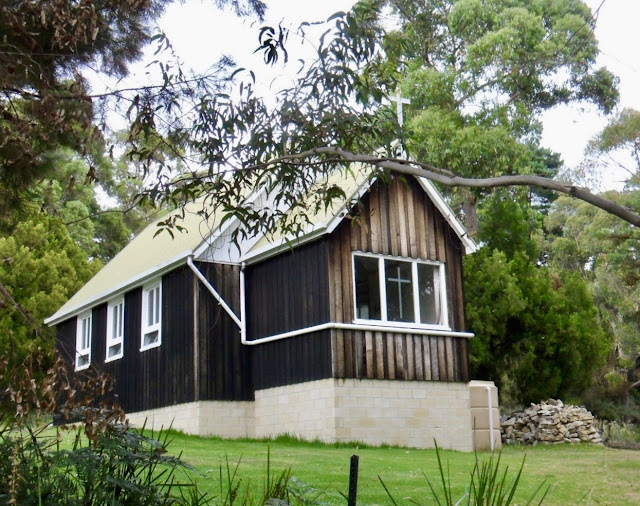
Coningham is a small settlement 3 kilometres south east of the town of Snug. Previously known as ‘little Snug’ it was renamed after a County in Buckingham, England. The only church at Coningham was a chapel located at Montgomery Park, a former Anglican Youth and Conference Centre. In 1947 Mrs Hedley Allen donated land to the Anglican church for the development of a youth centre at Coningham. Mrs Hedley requested that it be named Montgomery Park in honour of the fourth Anglican Bishop of Tasmania, Henry Montgomery, as well as his son, Field Marshall Bernard Montgomery. In November 1947 the Mercury reported: “Two and a half acres of land at Little Snug, given by Mr H. Allen, of Snug, for a youth and recreational centre, is to be known as Montgomery Park….This was announced by the Bishop of Tasmania (the Rt Rev G. F. Cranswick) at an informal gathering of youth leaders in Hobart on Monday…. Announcing acceptance of the offer by the Church of England,…. plans for clearing the land and bu...

No. 750 - Launceston - Punchbowl Christian Centre

Image
Punchbowl is a suburb to the south east of the city of Launceston. The area is well known by Launcestonians for the Punch Bowl Reserve which centres on a natural rock fissure and waterfall. In earlier times it was known as The Devil’s Punchbowl. The Punchbowl Christian Centre was previously known as the Punchbowl Bible Chapel and was one of four Christian Brethren churches established in the city. The church’s origins date back to the 1950s however it was not until 1961 that a chapel was built on Punchbowl Road. This building was outgrown by the late 1980s and in 1990 a new church was built on the site of the old Punchbowl Zoo. A condition of the church’s acquisition of the site was that the building also had to serve as a community centre. A multipurpose building was constructed which included an auditorium with a capacity to seat 1000 people. The church was built by Peter McCormack and was officially opened in July 1991. The original Punchbowl Bible Chapel is now used by the Assem...

No. 740 - Ulverstone - Camp Clayton Chapel

Image
Camp Clayton is a youth church camp located on the north west coast and is situated approximately midway between Turners Beach and Ulverstone. Camp Clayton is owned by local Tasmanian Christian churches affiliated with the Christian Community Churches of Australia, previously known as the Christian Brethren. The Christian Brethren also developed youth camp sites at Blue Lagoon (Dodges Ferry) in 1961 and Riverbend near Smithton in the 1970s. Camp Clayton’s origins date back to January 1948, when the first Brethren youth camp was held at Wesley Dale near Mole Creek. In 1950 Wesley Dale’s facilities were turned into a hostel for Dutch migrants who worked on the estate thus a new camp site had to found. In 1950 a property on Clayton’s Rivulet near Ulverstone was purchased and an assembly hall, dining hall and dormitories were built by voluntary labour. The first Christian youth camp on the site was held in December 1950. In 1996 Camp Clayton purchased the former ‘All Saint’s Anglican ...

No. 678 - Kings Meadows - The Branch Christian Church

Image
Kings Meadows is a southern suburb of the city of Launceston. Kings Meadows grew rapidly after World War Two but few places of worship have been established in the area since it was first settled in the mid 19th century. The Branch Christian Church is one of only two denominations now active in the suburb. The Branch Christian Church was founded in 1999. The church went on to established a place of worship in Kings Meadows in 2006. The church is a member of the Fellowship of Independent Evangelical Churches which currently has 39 churches in Australia including two in Tasmania. Additional information and sources about the church and building are most welcome as all articles are updated. I can be contacted through this page or my Facebook page "Churches of Tasmania" which is linked here: < Churches of Tasmania > Links of interest: https://www.thebranch.org.au https://www.fiec.org.au

No. 613 - New Norfolk - The Energizer Church

Image
New Norfolk is a large town on the banks of the Derwent River approximately 40 kilometres west of Hobart. It is a historic town with its origins dating back to 1806. There are seven active churches in New Norfolk; of these perhaps the most unusual building is the ‘Energizer Church’ located on Circle Street. At first glance it would appear that the church is a converted commercial building. A photograph of the church taken in 1995 shows a large cross on a tower-like structure above the building, suggesting that it may have been designed as a church or hall.  However it was in fact a former fire station built in the 1940's.  When New Norfolk's fire station moved to Back River Road, the building was acquired by the church and converted into a hall. The building has since been extended and a modern church hall is located at the rear. The Energizer Church was previously known as the Derwent Valley Christian Church. The church identifies itself as pentecostal. Additional informa...

No. 591 - Granton - Our Lady Queen of Croatians and Queen of Peace

Image
Granton is a suburb of Greater Hobart and is situated approximately 20 kilometres north of the city centre. Originally known as South Bridgewater, it was renamed as a tribute to Charles Henry Grant, one time General Manager of the Main Line Railway which opened in 1876. Tasmania is home to about 1200 Croatians and their families. The first Croatians came to Tasmania in the 19th century but most migrated after World War Two, either for political or economical reasons. On eighth of December 1992, on the feast of the Immaculate Conception, the church at Granton was consecrated to ‘Our Lady Queen of Croatians and Queen of Peace’ by the Archbishop of Split. In the late 1980s the Croatian community, led by Fr Hunski, began to build a church at Granton. Fr Hunski contributed much of the labour, particularly with the construction of the church tower. The church is is a legacy to the faith and community spirit of the Croatian people in Tasmania. The church is also known as the Croatian Catholic...

No. 564 - Bell Bay - The Mission to Seafarers

Image
The Mission to Seafarers (formerly The Missions to Seamen) is a Christian welfare charity serving merchant crews around the world. It operates through a global Mission family network of chaplains, staff and volunteers and provides practical, emotional and spiritual support through ship visits, drop-in seafarers centres and a range of welfare and emergency support services. The Mission to Seafarers has its roots in the work of Anglican priest, John Ashley, who in 1835 was on the shore at Clevedon with his son who asked him how the people on ships in the Bristol Channel could go to church. Recognising the needs of the seafarers on the four hundred sailing vessels in the Bristol Channel, he created the Bristol Channel Mission. He raised funds, and in 1839 a specially designed mission cutter named Eirene was built with a main cabin which could be converted into a chapel for 100 people. His work inspired similar ministries in the UK, and it was decided in 1856 that these groups should be fo...

No. 533 - Penguin Baptist Centre

Image
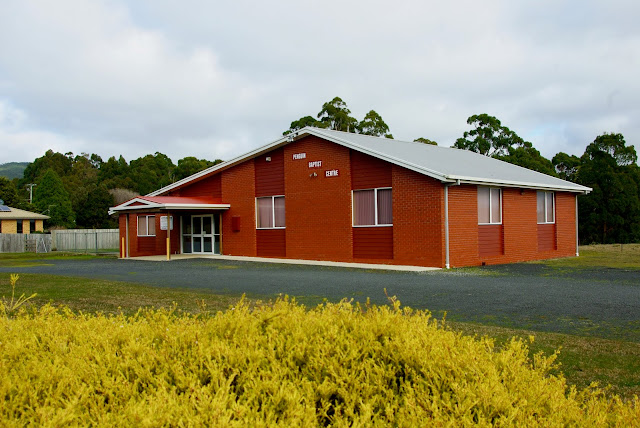
Penguin is a coastal town situated approximately 30 kilometres west of Devonport. It was one of the last coastal towns to be settled in the 1860’s. The Victorian gold rush created a renewed demand for timber and consequently wood cutters and splitters settled in the area. The town was named by the botanist Ronald Campbell Gunn after the penguin rookeries that were once common along this part of the coast. Penguin Baptist Church is a modern building situated on Ironcliffe Road about 2 kilometres from the centre of the town. This building replaced the first church built in 1908 which was situated near the centre of Penguin on the corner of Crescent Street (previously Station Street) and Ironcliffe Road. [ see No. 533 ] Until a few years ago this was the location of ‘The Rock Community Church’ which has since moved to premises on Dooley Street. The new church, known as the ‘Penguin Baptist Centre’, opened in 1995. Photograph: Duncan Grant 2019 Photograph: Duncan Grant 2019 ...

No. 495 - Sanctuary Hill Reformed Church at Penguin

Image
Penguin is a small country town on the northwest coast approximately 30 kilometres west of Devonport. It was one of the last coastal towns to be settled in the 1860’s. The Victorian gold rush created a demand for timber resulting in a large number of cutters and splitters establishing a settlement at Penguin. The town was named by botanist Ronald Campbell Gunn after the penguin rookeries that are common in the area. Sanctuary Hill Reformed Church is part of the Christian Reformed Churches of Australia (CRCA), formerly known as the Reformed Churches of Australia and belonging to the Reformed Presbyterian tradition. In the post-war years Dutch immigrants from the Netherlands settled along the north west coast of Tasmania. Unlike Dutch communities on the Australian mainland, whose members were predominantly Catholic, the majority of the Dutch in Tasmania are Protestant. Approximately 3500 Dutch migrants had settled in Tasmania in the 1950’s forming the State’s largest non-English speaking...