No. 1640 - Triabunna - St Anne's Catholic Church (1869) - 'The Echoes of a Voice Still Forever'
Triabunna is a small town on the East Coast situated at the northern end of Spring Bay. It was established as a whaling station and was later used as a garrison town to service the Maria Island convict settlement. Triabunna is an aboriginal word for 'native hen'.
Only two churches have been built at Triabunna. In 1909 a correspondent for Hobart’s Daily Post complained:
“Judging from the small number of churches seen here, only two, the Anglican and the Roman Catholic, the spiritual side of the people is thoroughly neglected. There are supposed lo be fortnightly services held in the Anglican, and occasionally in the other. There are no Methodist, Presbyterian, etc., church to be found here as may be seen elsewhere. On the whole there is little or nothing done to encourage church going. The young fellows have to turn their attention to football on Sundays”.
In the early1860s religious services for Anglicans at Triabunna were held in the Municipal buildings which were designed for use “as a place of worship, school room…[and] lecture hall”. In 1864 Bishop Willson requested that the Spring Bay Municipal Council make available “accomodation for the performance of Divine Service” for Catholics at Triabunna. The Council resolved:
“That his Lordship be written to the effect that the police office was available to the Catholic priest on any Sunday he was desirous of occupying the same for..[this]…purpose”.
In the same year Bishop Willson was was successful in obtaining a government grant of “2 acres in the township of Triabunna….reserved for church, school and burial purposes for the Roman Catholic community”. Within five years a start was made on the construction of a church.
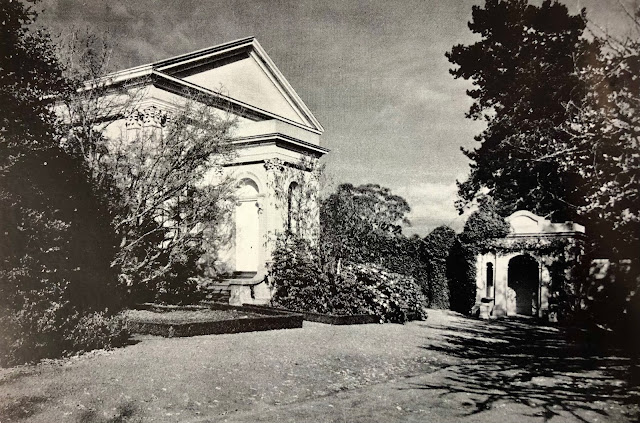
The early history of St Anne’s Catholic church is poorly documented. The cement rendered building belies the fact that it dates back to the late 1860s and was designed by the esteemed architect Henry Hunter. Over the years extensions and renovations to the church have significantly changed the appearance the original building.
Reports of the the opening of St Anne’s in March 1869 is limited to a handful of published sources. The Catholic Standard records that the church was officially opened by Bishop Daniel Murphy on St Patrick’s Day and dedicated to St Anne, the mother of the the Blessed Virgin Mary. The building was constructed by a former convict, John Felmingham, who was also responsible for erecting the Buckland Inn as well as the Pembroke Hotel and the Municipal buildings at Triabunna. Another report published in the Hobart Mercury only states that the “Bishop and four priests” opened a new chapel and that collections were made and “some twenty pounds sterling was the result”, nearly clearing the whole debt due on the building.
The church underwent significant modifications in the late 19th century. In 1883 the Mercury reported that a concert and dance was held in Triabunna’s Council Chambers to raise funds for the repair of the Catholic church. In 1888 further fundraising was held to pay for new additions to the church which included a porch and vestry. The porch had been completed in December 1887 with stone from the Orford Quarry donated by James Crabtree.
In 1888 a bell was donated to St Anne’s by artist and novelist, Louisa Anne Meredith, in memory of her husband and son. Upon her death in October 1895, Louisa Meredith’s anonymous gift to the church was revealed in a letter published in the Hobart Mercury:
“The echoes of a voice stilled for ever will linger long in the memory of the surrounding loved ones, and a sweetly pathetic echo of the voice of Mrs Charles Meredith comes to us from Triabunna, where for many years she resided. When the deceased lady was quitting her sea side home in 1888 she wrote to Mr J. J. McCluskey, sending him a bell for use at St Anne's Church. At her request no public acknowledgment was made of the gift, but the silence may now be broken, and the letter, breathing tender, loving pathos in every line, may be published. It reads as follows:
By Mr George Burden with bell. J J. McCluskey, Esq, Triabunna - To my many good friends, members of the Church of St Anna (Anne), Triabunna - I am aware that you have not a Church Bell, and that you desire one. I give to you, as a memorial of your old staunch friend, my beloved husband, and also of my dear son Charles, whose mortal remains you followed to their last rest but yesterday — the sweet, sonorous bell, which has been to me and mine as a familiar home-voice — at Riversdale— at Twamley— and at Mulunnah— for the past 40 years. I shall not listen for it again— but I pray you, when you hear it, think kindly of my dear lamented dead, and let it toll for an hour at noon on the day of my own burial, whenever that may be. I wish you God's best blessings, and bid you farewell. — Louisa A. Meredith, Mulunnah, Orford, September 19, 1688.
The bell, blessed by Father Holehan has been rung every Sunday, and its tones will now chime out a sweetly sad requiem for the saintly woman whose life was an example and whose memory will be fragrant and lasting one”.
The church’s shingle roof was replaced in the early 1900s as a result of a donation by Michael Bresnehan of Rheban. In 1929 the shingle roof was removed and replaced with galvanised iron and the church’s stonework was repaired and lime-washed. In 1969, the year of St Anne’s centenary, the church’s weathered stonewalls were rendered with cement and in the late 1970s the deteriorating east wall of the building was replaced with rendered cement bricks.
St Anne’s falls within the Richmond Catholic Parish and Mass is held on the first and third Sunday of each month.
Sources and Further Information:
The Mercury, Tuesday 27 May 1862, page 3
Hobart Town advertiser, Saturday 17 September 1864, page 5
The Mercury, Monday 24 October 1864, page 2
The Tasmanian Catholic Standard, Volume 3, March 1869.
The Mercury, Saturday 3 April 1869, page 3
The Mercury, Monday 30 April 1883, page 3
The Mercury, Thursday 16 February 1888, page 3
The Mercury, Tuesday 19 November 1895, page 2
The Mercury, Wednesday 21 August 1929, page 6
The Mercury, Thursday 17 October 1929, page 6
The Mercury, Thursday 5 December 1929, page 3
Fergusson, K. M. (Kathleen M.). Spring Bay, St. Anne's Catholic Church, Triabunna / [by] K.M. Fergusson [K.M. Fergusson] [Triabunna, Tas.] 1979
Lester, Suzanne. Spring Bay, Tasmania : a social history / Suzanne Lester Artemis Publishing and Marketing Consultants Hobart 1994
Southerwood, W. T., 1938-. Priceless heritage : the Tasmanian Catholic community 1772-2010 / by W. T. Southerwood Stella Maris Books St. Leonards, Tas. 2010
https://adb.anu.edu.au/biography/meredith-louisa-ann-4435
Only two churches have been built at Triabunna. In 1909 a correspondent for Hobart’s Daily Post complained:
“Judging from the small number of churches seen here, only two, the Anglican and the Roman Catholic, the spiritual side of the people is thoroughly neglected. There are supposed lo be fortnightly services held in the Anglican, and occasionally in the other. There are no Methodist, Presbyterian, etc., church to be found here as may be seen elsewhere. On the whole there is little or nothing done to encourage church going. The young fellows have to turn their attention to football on Sundays”.
In the early1860s religious services for Anglicans at Triabunna were held in the Municipal buildings which were designed for use “as a place of worship, school room…[and] lecture hall”. In 1864 Bishop Willson requested that the Spring Bay Municipal Council make available “accomodation for the performance of Divine Service” for Catholics at Triabunna. The Council resolved:
“That his Lordship be written to the effect that the police office was available to the Catholic priest on any Sunday he was desirous of occupying the same for..[this]…purpose”.
In the same year Bishop Willson was was successful in obtaining a government grant of “2 acres in the township of Triabunna….reserved for church, school and burial purposes for the Roman Catholic community”. Within five years a start was made on the construction of a church.
The early history of St Anne’s Catholic church is poorly documented. The cement rendered building belies the fact that it dates back to the late 1860s and was designed by the esteemed architect Henry Hunter. Over the years extensions and renovations to the church have significantly changed the appearance the original building.
Reports of the the opening of St Anne’s in March 1869 is limited to a handful of published sources. The Catholic Standard records that the church was officially opened by Bishop Daniel Murphy on St Patrick’s Day and dedicated to St Anne, the mother of the the Blessed Virgin Mary. The building was constructed by a former convict, John Felmingham, who was also responsible for erecting the Buckland Inn as well as the Pembroke Hotel and the Municipal buildings at Triabunna. Another report published in the Hobart Mercury only states that the “Bishop and four priests” opened a new chapel and that collections were made and “some twenty pounds sterling was the result”, nearly clearing the whole debt due on the building.
The church underwent significant modifications in the late 19th century. In 1883 the Mercury reported that a concert and dance was held in Triabunna’s Council Chambers to raise funds for the repair of the Catholic church. In 1888 further fundraising was held to pay for new additions to the church which included a porch and vestry. The porch had been completed in December 1887 with stone from the Orford Quarry donated by James Crabtree.
In 1888 a bell was donated to St Anne’s by artist and novelist, Louisa Anne Meredith, in memory of her husband and son. Upon her death in October 1895, Louisa Meredith’s anonymous gift to the church was revealed in a letter published in the Hobart Mercury:
“The echoes of a voice stilled for ever will linger long in the memory of the surrounding loved ones, and a sweetly pathetic echo of the voice of Mrs Charles Meredith comes to us from Triabunna, where for many years she resided. When the deceased lady was quitting her sea side home in 1888 she wrote to Mr J. J. McCluskey, sending him a bell for use at St Anne's Church. At her request no public acknowledgment was made of the gift, but the silence may now be broken, and the letter, breathing tender, loving pathos in every line, may be published. It reads as follows:
By Mr George Burden with bell. J J. McCluskey, Esq, Triabunna - To my many good friends, members of the Church of St Anna (Anne), Triabunna - I am aware that you have not a Church Bell, and that you desire one. I give to you, as a memorial of your old staunch friend, my beloved husband, and also of my dear son Charles, whose mortal remains you followed to their last rest but yesterday — the sweet, sonorous bell, which has been to me and mine as a familiar home-voice — at Riversdale— at Twamley— and at Mulunnah— for the past 40 years. I shall not listen for it again— but I pray you, when you hear it, think kindly of my dear lamented dead, and let it toll for an hour at noon on the day of my own burial, whenever that may be. I wish you God's best blessings, and bid you farewell. — Louisa A. Meredith, Mulunnah, Orford, September 19, 1688.
The bell, blessed by Father Holehan has been rung every Sunday, and its tones will now chime out a sweetly sad requiem for the saintly woman whose life was an example and whose memory will be fragrant and lasting one”.
The church’s shingle roof was replaced in the early 1900s as a result of a donation by Michael Bresnehan of Rheban. In 1929 the shingle roof was removed and replaced with galvanised iron and the church’s stonework was repaired and lime-washed. In 1969, the year of St Anne’s centenary, the church’s weathered stonewalls were rendered with cement and in the late 1970s the deteriorating east wall of the building was replaced with rendered cement bricks.
St Anne’s falls within the Richmond Catholic Parish and Mass is held on the first and third Sunday of each month.
 |
| St Anne's Catholic Church Triabunna |
 |
| St Anne's with the Catholic cemetery on the northern side of the church. |
 |
| A drawing of St Anne's in 1930 - from Suzanne Lester's book -Spring Bay, Tasmania : A Social History (artist's name is not provided) Note that window on the eastern wall was removed in the 1970s due to deteriorating stone walls and replaced with a solid cement brick wall. |
 |
| Louisa Anne Meredith - Allport Library and Museum of Fine Arts, State Library of Tasmania, AUTAS001125883173 |
Sources and Further Information:
The Mercury, Tuesday 27 May 1862, page 3
Hobart Town advertiser, Saturday 17 September 1864, page 5
The Mercury, Monday 24 October 1864, page 2
The Tasmanian Catholic Standard, Volume 3, March 1869.
The Mercury, Saturday 3 April 1869, page 3
The Mercury, Monday 30 April 1883, page 3
The Mercury, Thursday 16 February 1888, page 3
The Mercury, Tuesday 19 November 1895, page 2
The Mercury, Wednesday 21 August 1929, page 6
The Mercury, Thursday 17 October 1929, page 6
The Mercury, Thursday 5 December 1929, page 3
Fergusson, K. M. (Kathleen M.). Spring Bay, St. Anne's Catholic Church, Triabunna / [by] K.M. Fergusson [K.M. Fergusson] [Triabunna, Tas.] 1979
Lester, Suzanne. Spring Bay, Tasmania : a social history / Suzanne Lester Artemis Publishing and Marketing Consultants Hobart 1994
Southerwood, W. T., 1938-. Priceless heritage : the Tasmanian Catholic community 1772-2010 / by W. T. Southerwood Stella Maris Books St. Leonards, Tas. 2010
https://adb.anu.edu.au/biography/meredith-louisa-ann-4435
https://www.churchhistories.net.au/church-catalog/triabunna-tas-st-annes-catholic
Additional photographs of the church can be viewed at:
Tasmanian Pictorial Church Index - https://app.taschurches.org/st-annes-catholic-triabunna-256
Additional photographs of the church can be viewed at:
Tasmanian Pictorial Church Index - https://app.taschurches.org/st-annes-catholic-triabunna-256
The Catholic Cemetery at Triabunna: Link HERE


Comments
Post a Comment