Posts

No. 1304 - Devonport - Methodist Church (1889-1932)

Image
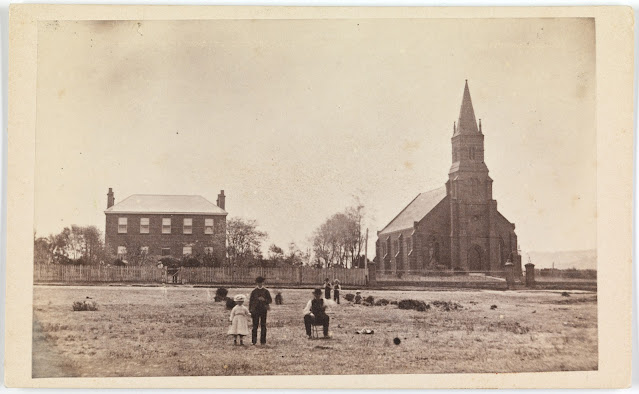
Devonport was established in 1890 with the merging of two towns on the opposite banks of the Mersey River: Formby on the west bank and Torquay on the east bank. The area was first settled in the 1840s. While Wesleyan-Methodists had been active in the Mersey region from the 1850s, it was not until the 1880s that a church was built at Formby (West Devonport). In the early years services were held in private houses and at the “Protestant Hall” which opened in 1887. When the Baptists acquired the hall, the Wesleyans set out to build a church of their own. In February 1888 a committee approved plans for a church combined with a Sunday school to be built on land donated by Robert Stewart and Basil Archer. The building of the church did not get off to a good start. On 13 April 1889, the church’s architect, Mr Thomas Kimpton, was knocked down and killed by a railway truck being shunted along the line at the Victoria Ferry near the wharf at Formby. He had been inspecting the building site befo...

No. 1303 - Sandy Bay - York Street Gospel Hall (1922)

Image
This ‘blog entry’ is one of a series of articles about places of worship that are barely represented in the historical record. Often no images of these buildings have survived. My hope is that these brief articles may result in further information and photographs coming to light enabling a more complete history to be preserved. The York Street Gospel Hall and Sunday school was built soon after the subdivision of the Sandy Bay Golf links in 1916. the building operated continuously from 1922 to 1981 as a church hall and Sunday school. The Gospel Hall and schoolroom was likely associated with The christian Brethren. While the building has been converted into a house, traces of the of its origins are still evident with a small bell tower, a lancet window and a church notice board. Further information about this church is welcomed. I can be contacted through the comments or through the Facebook group "Churches of Tasmania”. The former Gospel Hall & Schoolroom on York street at Sand...

No. 1302 - Hobart - Mariners' Church (1863-1917)

Image
The Mariners’ Church stood on Franklin Wharf for 55 years before it was dismantled and removed to Sandy Bay in 1917. The building was located on the corner of Morrison Street and Elizabeth Street, a site now occupied by the ‘Marine Board Building’. The origins of the Mariners’ Church date back to 1835 when a ‘Bethel Union’ was established: “In the year 1835, a few gentlemen interested in the welfare of seamen belonging to, or visiting the Port of Hobart Town, assembled at Dr. Ross's Library and Reading Room, Collins-street, when an association was formed under the designation of the Bethel Union, for the purpose of visiting the shipping, distributing religious tracts, and preaching to seamen of vessels in the harbour. In this work, ministers and others belonging to the different denominations, took part…”. Lieutenant-Governor Colonel Arthur granted the use of a building as a Bethel chapel on the New Wharf which had previously been used by convict labourers: “A prison hulk was stat...

No. 1301 - Hobart - New Wharf - Bethel Chapel (1838-1862)

Image
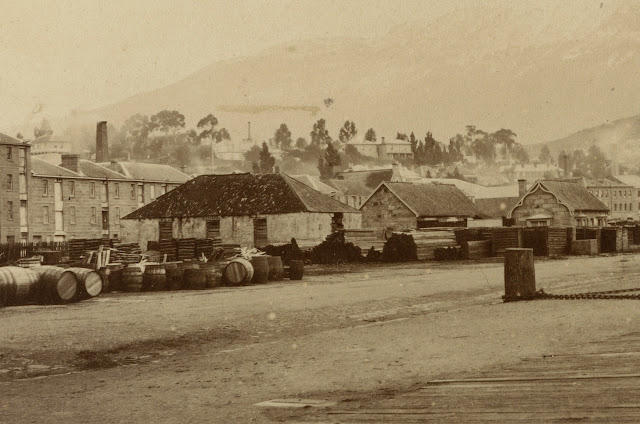
The subject of this article is the little known Bethel chapel that stood on Hobart’s ‘New Wharf’. This served sailors visiting the town for a little over 20 years before it was replaced by the Mariners Church built on Franklin Wharf. In 1835 a ‘Bethel Union’ was established to meet the ‘spiritual needs’ of ‘seamen’ visiting Hobart: “In the year 1835, a few gentlemen interested in the welfare of seamen belonging to, or visiting the Port of Hobart Town, assembled at Dr. Ross's Library and Reading Room, Collins-street, when an association was formed under the designation of the Bethel Union, for the purpose of visiting the shipping, distributing religious tracts, and preaching to seamen of vessels in the harbour. In this work, ministers and others belonging to the different denominations, took part…”. In 1836, as a result of representations made by Reverend Frederick Miller, Lieutenant-Governor Arthur granted the use of a building on New Wharf as a Bethel chapel. The building had prev...

No. 1300 - Oatlands - 'Campbell Memorial Church' - Presbyterian Manse (1860)

Image
This article is one of a series about buildings associated with Tasmania’s historical churches and religious orders. These buildings include Sunday schools, parish halls, convents, orphanages, schools and residences of the clergy. Ancillary buildings are often overlooked and rarely feature in published histories. My aim is to create a basic record of these buildings, including of those that no longer exist. The town of Oatlands acquired its name in 1821 when Governor Lachlan Macquarie passed through the area. He noted that it was “a very eligible situation for a town, being well watered and in the midst of a rich fertile country”. A settlement was well established by the late 1820s by which time several cottages, a barracks, gaol and a church had been constructed. The old Presbyterian Manse is situated on the south side of the Uniting (Presbyterian) Church on High Street. Oatlands’ first Presbyterian church opened in 1856 but within two years the building was reduced to rubble when the...

No. 1299 - Latrobe - Gilbert Street Barracks - "Salvation Army Joe"

Image
Latrobe is a large country town on the east bank of the River Mersey. The settlement was named after Charles LaTrobe, who was acting Lieutenant-Governor of Tasmania in 1846-7. Until the River Mersey silted up Latrobe was once an important port town. The Salvation Army has an historical link with Tasmania. While living in London in the 1870s, Launceston businessman and philanthropist, Henry Reed, donated £5000 to William Booth to help the Salvation Army establish a firm financial foundation for its work. In 1883 the Salvation Army was established at Launceston and ‘Army’ corps were soon after formed at Hobart, Latrobe, Waratah and at other towns. The Salvation Army arrived at Latrobe in late 1883 and remained active in the town until 1917. Thereafter it functioned intermittently with the Salvation Army Hall or “barracks” briefly reopening in 1919 and again in 1930.  The ‘Army’s’ first premises were in an old factory building and later a hall or ‘barracks’ was established on Gilbert ...

No. 1298 - Montrose - 'Hobart Central Church'

Image
Montrose is northern suburb of Hobart situated on the north side of the Glenorchy. It is named after the Montrose Estate owned by Robert Littlejohn who is believed to have been born in Montrose in Scotland. Hobart Central Church is a multi-cultural church established in 2005 by Pastor Paul J.B Kim and his wife Young Sook Lee. The church is associated with The Australian Christian Churches (ACC), formerly Assemblies of God in Australia. The ACC is a network of Pentecostal churches in Australia affiliated with the World Assemblies of God Fellowship, which is the largest Pentecostal denomination in the world. The church was established at Montrose in 2023 after moving from its previous home in Hobart’s former Memorial Uniting Church on Elizabeth Street. The Montrose building was previously used by the Plymouth Brethren. The history of this the building needs further research. It is possible that it may have been built as a “Protestant Hall” in 1886 and later used as a school hall. Source...

No. 1297 - Deloraine - 'Convent of Mercy' (1895)

Image
This article is one of a series about buildings associated with Tasmania’s historical churches and religious orders. These buildings include Sunday schools, parish halls, convents, orphanages, schools and residences of the clergy. Ancillary buildings are often overlooked and rarely feature in published histories. My aim is to create a basic record of these buildings, including of those that no longer exist. Deloraine is a historic tourist town situated on the Meander River and lies approximately halfway between the cities of Launceston and Devonport. The settlement dates to the 1830s and was named by the surveyor, Thomas Scott. The Church of the Holy Redeemer opened on Tuesday 9 November 1886, replacing a earlier timber church built in the 1850s. By the mid 1890s, plans were made to build a school for the Catholics of Deloraine. Father Walsh initiated steps to bring a religious community of nuns to Deloraine, for which more extensive facilities were required. In January 1895 the Sister...